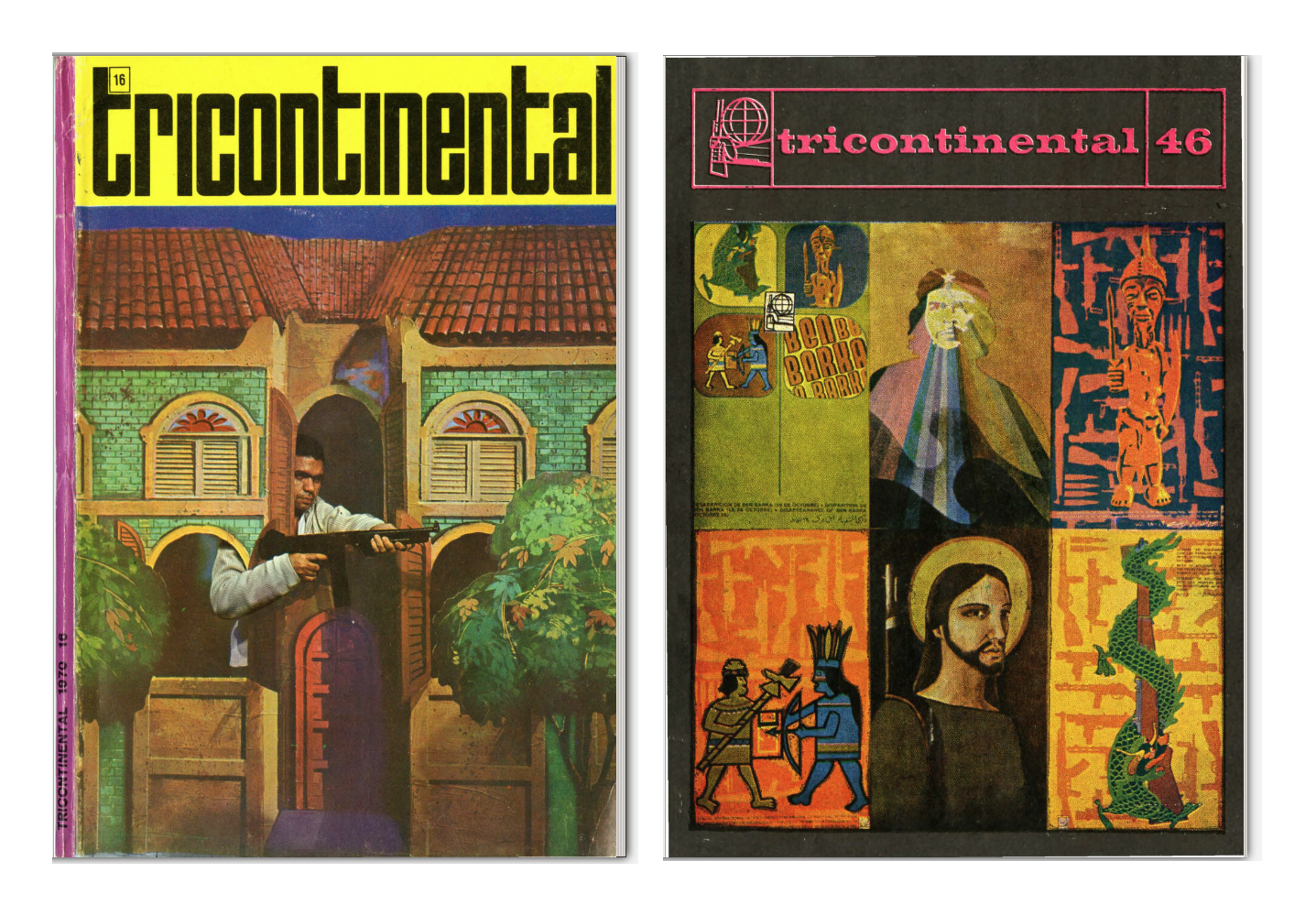
This is the second section in Part 2 of my recent grad school design paper in which I explore two contemporary, post-capitalist movements that have much to offer our creative endeavor to imagine a new, ecologically sensitive design story. Degrowth and solarpunk are neither finished experiments nor cautionary tales but living, still-unfolding proposals, argued over…
Posts Tagged
capitalism
Designing for Beauty, Sufficiency, and Collective Care – Part 1d: The Design Institutes of China
This is the fourth section in Part 1 of my recent grad school design paper in which I explore four laboratories of non-capitalist and postsocialist design. Please find the preceding sections below if you’d like to catch up: Introduction Part 1a: The Designed Object as Comrade in Constructivist Russia Part 1b: Advertising as Cultural Strategy…
Designing for Beauty, Sufficiency, and Collective Care – Part 1c: Design in Cuba: Sufficiency and Resourcefulness in Action
This is the third section in Part 1 of my recent grad school design paper in which I explore four laboratories of non-capitalist and postsocialist design. Please find the preceding sections below if you’d like to catch up: Introduction Part 1a: The Designed Object as Comrade in Constructivist Russia Part 1b: Advertising as Cultural Strategy…
Designing for Beauty, Sufficiency, and Collective Care – Part 1b: Advertising as Cultural Strategy in Socialist Yugoslavia
This is Part 1b of my recent grad school design paper, the introduction can be read here. and Part 1a can be read here. … From 1918 to 1992 Yugoslavia improvised their very own “third way” type of economy. In 1948 Josip Broz Tito broke with Stalin and pulled Yugoslavia (which today is comprised of…
Designing for Beauty, Sufficiency, and Collective Care – Introduction
I’ve decided to post my recent grad school paper in chunks since it is much longer than an average blog post. Below is the introduction. … Introduction Design is many things, but if we reflect on design as a trade or practice or vocation for a short time one might envision the people working as…
Reflections on Luigi Mangione and Redemptive Violence
“All too many atomized Americans have taken up arms and carried out shocking acts of violence over the past decades, usually without anything more than the desire to harm and kill for their own sake. Mangione might be a sign of something new: a political moderate with no movement behind him, no history of activism,…
William James and Jenny Odell: Rendering Reality From Gray Chaotic Indiscriminateness
“Millions of items of the outward order are present to my senses which never properly enter into my experience. Why? Because they have no interest for me. My experience is what I agree to attend to. Only those items which I notice shape my mind—without selective interest, experience is an utter chaos. Interest alone gives…
Brief Reflections on Intellectual Effort as Private Property and Economic Commodity, Copyright, and The Social Activity Called Art
“’Authorship’ – in the sense we know it today, individual intellectual effort related to the book as an economic commodity – was practically unknown before the advent of print technology. Medieval scholars were indifferent to the precise identity of the “books” they studied. In turn, they rarely signed even what was nearly their own. They…
A Rechristening of Heavenly Ecstasy in a Cold Baptismal Font of Money: McCarraher and Ruskin on the Enchantments of Mammon
“If, for Marx and Weber, capitalism was the dynamo of secular modernity, for Ruskin, it embodied a metamorphosis of the sacred, a perverse enchantment of the world. Ruskin clearly feared that ‘secularization’ was really a capitalist form of idolatry—a rechristening of heavenly ecstasy in a cold baptismal font of money, a re-enchantment conducted under the…
No One is First, and No One is Last: Graber and Wengrow on Ethnomathematics and Egalitarianism
“But how did these households come together in such numbers to form the great concentric arrangements which give the Ukrainian mega-sites their distinctive plan? […] To understand how the citizens put this mental image into effect, translating it into a workable social reality at such enormous scales, we cannot rely on archaeology alone. Fortunately, the…