Category

Books

Designing for Beauty, Sufficiency, and Collective Care – Part 2a: What is Degrowth?

This is the first section in Part 2 of my recent grad school design paper in which I explore two contemporary, post-capitalist movements that have much to offer our creative endeavor to imagine a new, ecologically sensitive design story. Degrowth and solarpunk are neither finished experiments nor cautionary tales but living, still-unfolding proposals, argued over…

Read More

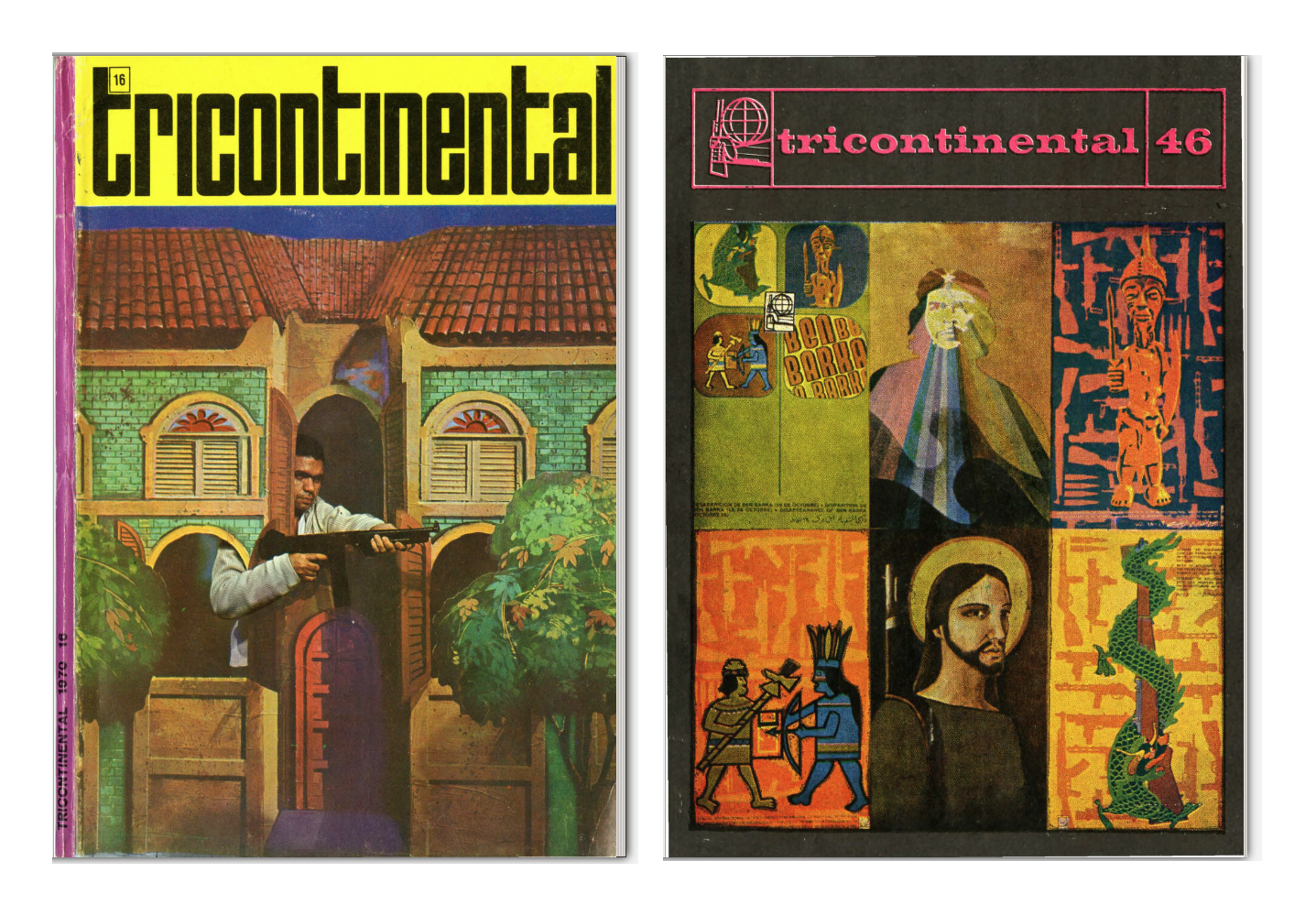
Designing for Beauty, Sufficiency, and Collective Care – Part 1c: Design in Cuba: Sufficiency and Resourcefulness in Action

This is the third section in Part 1 of my recent grad school design paper in which I explore four laboratories of non-capitalist and postsocialist design. Please find the preceding sections below if you’d like to catch up: Introduction Part 1a: The Designed Object as Comrade in Constructivist Russia Part 1b: Advertising as Cultural Strategy…

Read More

Designing for Beauty, Sufficiency, and Collective Care – Part 1b: Advertising as Cultural Strategy in Socialist Yugoslavia

This is Part 1b of my recent grad school design paper, the introduction can be read here. and Part 1a can be read here. … From 1918 to 1992 Yugoslavia improvised their very own “third way”  type of economy. In 1948 Josip Broz Tito broke with Stalin and pulled Yugoslavia (which today is comprised of…

Read More

The Designer as Moral Compass: Minimalism, Animism, and Quaker Plaining

“Rodchenko names a new kind of emotionally affective object: the comradely object of socialist modernity. Unlike the commodities he encounters on his visit to capitalist Paris, which elicit a possessive relation that makes the objects into “slaves,” things made in the socialist East will actively promote egalitarian socialist culture. They will replace the pleasure of…

Read More

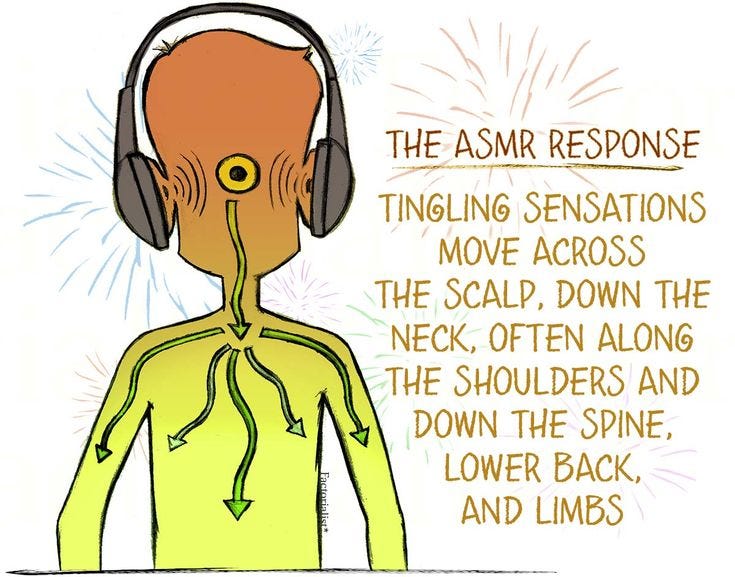
The Ordinary Texture of Existence: Reflections on ASMR and The Consummatory Satisfaction of Felt Quality

“Whisper whisper whisper.” –Anonymous ASMRtist old pond– frog jumps in. Plop! –Matsuo Bashô “In Whitehead’s analysis of an occasion of experience, the “category of transmutation” (PR 63) describes how the felt qualities of past events are fused into a new event with the consummatory satisfaction of an emergent pervasive aesthetic quality. […] Whitehead’s “satisfaction” is identified…

Read More

Each Occasion is Concerned With The Universe: Virtuous Oscilation, Whitehead, and Quaker Concernedness

“Consciousness flickers; and even at its brightest, there is a small focal region of clear illumination, and a large penumbral region which tells of intense experience in dim apprehension.” –Whitehead, Process and Reality “An exemplar can exemplify only some of its properties. It brings those properties to the fore by marginalizing, downplaying, or ignoring other…

Read More

The Manliest of All Rituals: Critical and Creative Nonviolent Reflections on Hunting

“The adoption of fixed settlements also created problems with regard to the status of women. When a hunter-gatherer people took up fixed settlement, in actual practice it pursued its livelihood through fishing or simple cultivation and herding, but it preserved the lifestyle that had existed in the hunter-gatherer phase. In sum, a division of labor…

Read More

The Theo-Aesthetic World of William Morris

Recently, for a grad school class, we were asked to write an essay on a “design pioneer” of our choice for the first half of the summer session. For the second half, the class was asked to create a visual project based on the designer we had chosen. I chose British designer, writer, thinker, and…

Read More

Losing Oneself: Brief Reflections on Identity, Roles, and Alienation

“Although the social structures in the contemporary world are less rigid than in ancient cultures, there are still many pre-established functions or roles that people readily identify with and which thus become part of the ego. This causes human interactions to become inauthentic, dehumanized, alienating. Those pre-established roles may give you a somewhat comforting sense…

Read More

The Repercussions of Military Power Reverberate Through the People: Grahm Adams and Systems of Domination

  “Then, having overcome this awkwardness, they [Jesus and friends] are confronted with another: a man ‘possessed’ by a demon, chained and living among the tombs, to represent both his affinity with death and his uncleaness. But nothing had the power to restrain him. And he speaks, or rather the spirit within him speaks: ‘My…

Read More