
This is Part 3a of my recent grad school design paper in which I begin to imagine a not-so-distant future world for the post-capitalist designer. We begin by de-commodifying the basic necessities of life before proceeding to identify some post-capitalist design needs (Part 3b) which will then allow us to consider the roles of the Regenerative Commons Designer (Part 3c).
Please find the preceding sections of the paper below if you’d like to catch up:
Part 1a: The Designed Object as Comrade in Constructivist Russia
Part 1b: Advertising as Cultural Strategy in Socialist Yugoslavia
Part 1c: Design in Cuba: Sufficiency and Resourcefulness in Action
Part 1d: The Design Institutes of China
…
“…while in communist society, where nobody has one exclusive sphere of activity but each can become accomplished in any branch he [sic] wishes, society regulates the general production and thus makes it possible for me to do one thing today and another tomorrow, to hunt in the morning, fish in the afternoon, rear cattle in the evening, criticise after dinner, just as I have a mind, without ever becoming [a] hunter, fisherman, herdsman or critic.” –Karl Marx84
In Part I we looked backward and laterally at how various non-capitalist societies organize their economies and visual cultures; in Part II we examined two contemporary movements that insist another economic story is possible. Now comes the hard part: building the world in which our post-capitalist designer wakes up, eats breakfast, and goes to work. A good starting place for us might be Karl Marx’s vision above which is about a life no longer defined—or confined—by one’s job, and it rests on a single structural precondition: that the basic means of life have been de-commodified, or pulled at least partly back out of the market. We will walk through four mainstream post-growth proposals below that are already surfacing in real policy and are already helping “form the structure of the new society within the shell of the old.”85
Lowered Working Hours
Of all the concrete proposals degrowth theorists put on the table, the reduction of working hours is among the most beloved. The figures vary from a four-day week to a move toward a twenty-hour week at the ambitious end of things.86 The idea has already been walked into real government, with the wellbeing-economy network (Finland’s prime minister among them) openly floating the four-day week as policy.87 For our purposes, what matters is what all that reclaimed time is for. A designer freed from the treadmill of billable hours is a designer with the time to make fewer, better, and more thoughtful things. Additionally, as eco-harmonist designers Lenneke Kuijer and Matthias Laschke remind us, “A focus on de-automation/re-skilling has the potential to reduce technological dependence and thereby the resource intensity of everyday life.”88 This means more time to cook, fix, grow, and make rather than buy. It is, quite literally, the ability to read and design in the morning, garden in the afternoon, and criticise after dinner. Work itself has also been redefined in this world: where GDP recognizes only what is sold, the wellbeing economy counts as “work” any contribution to collective flourishing, paid or unpaid; for example: the care of a child, cultivation of a garden, caring for a neighbor, or creation of a book or piece of software held in common.89
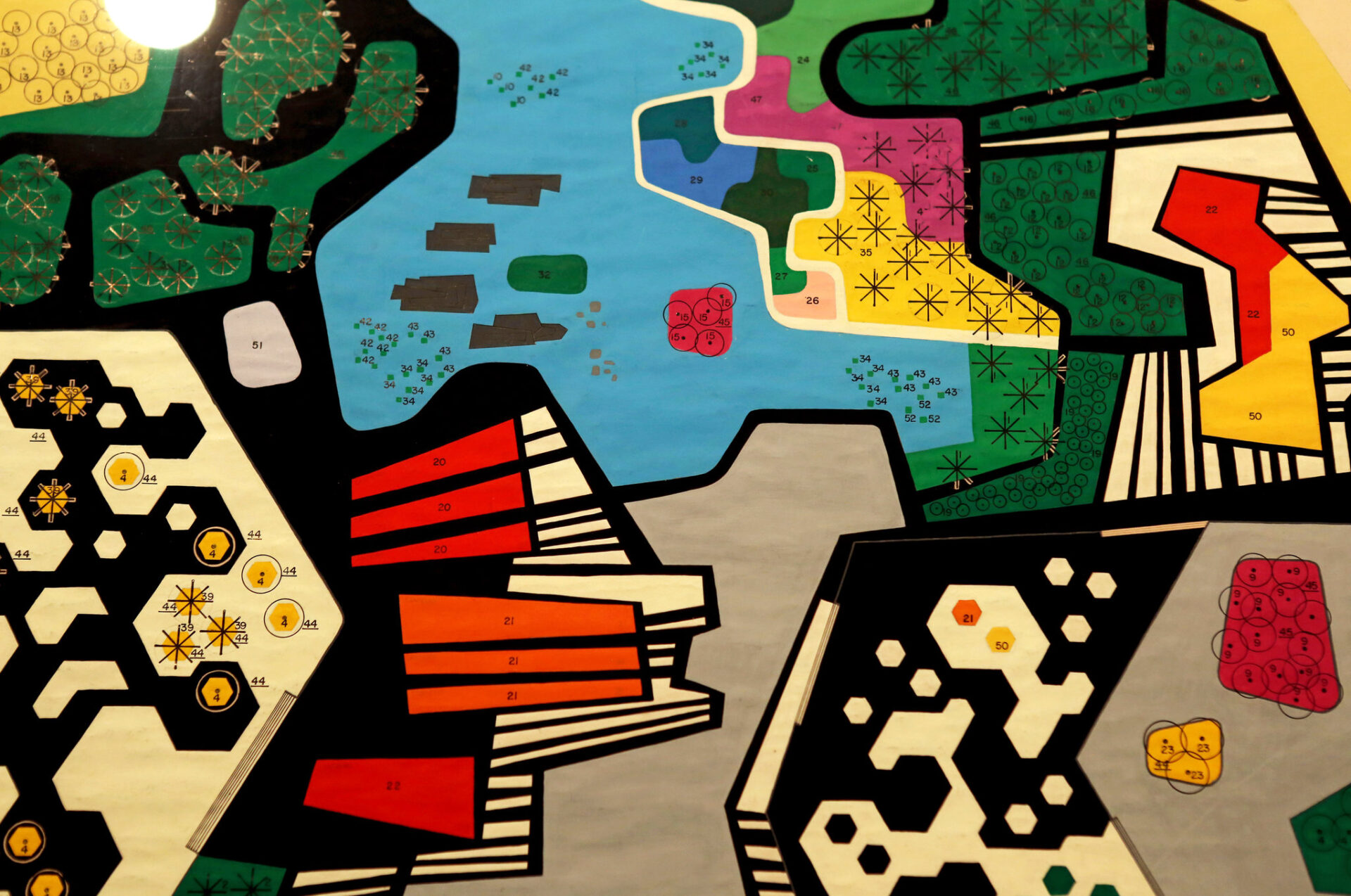
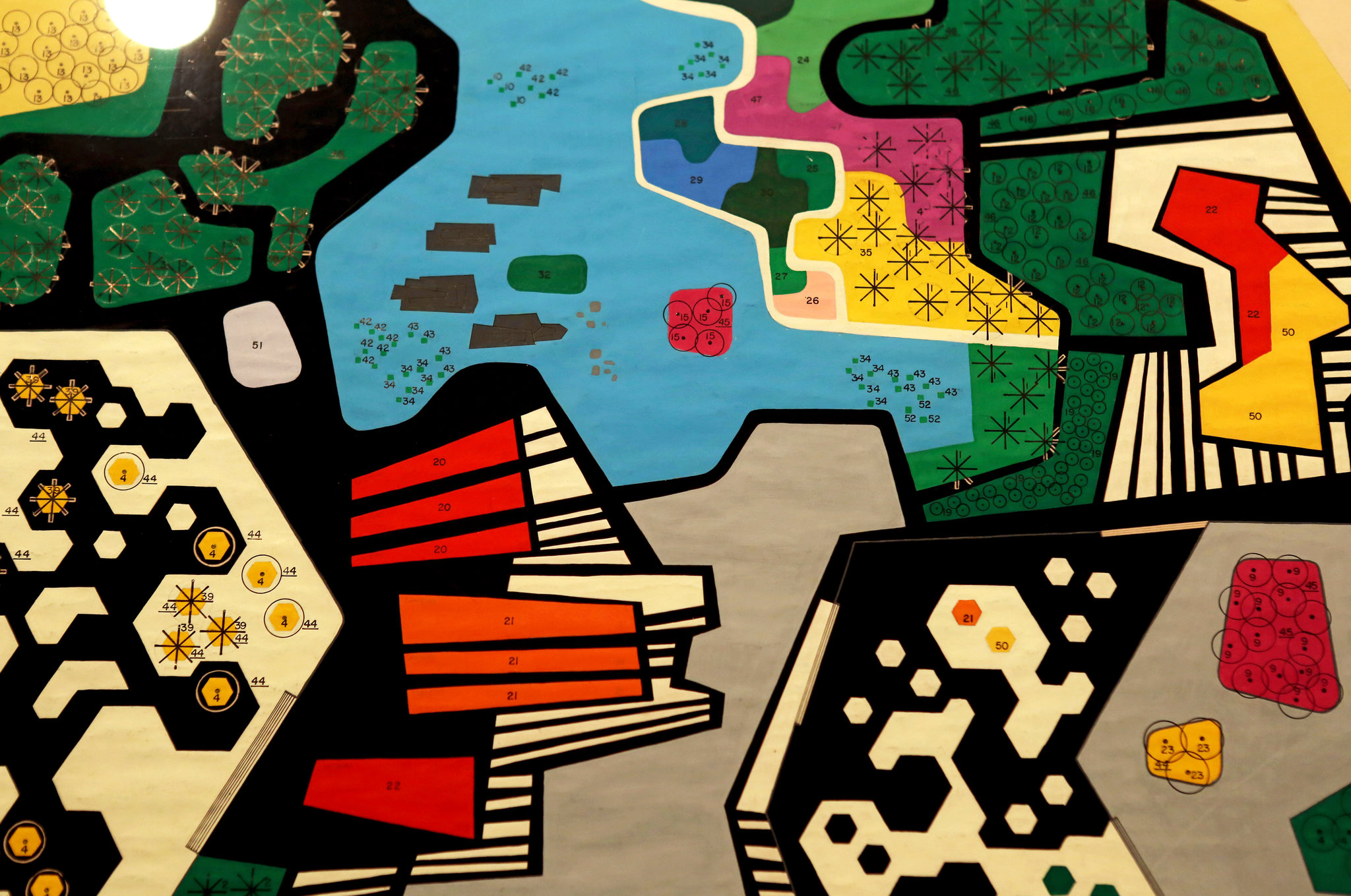 Landscape design above by Roberto Bule Marx, Brazilian landscape designer, artist, collector, and conservationist whose work transformed modern landscape architecture. Above: “A detail of Roberto Burle Marx’s design for the garden of the Ministry of the Army in Brasília from the early 1970s.”
Universal Basic Income
If shorter hours loosen the grip of wage labor, a universal basic income (along with its cousins, the job guarantee and work-sharing) loosens the grip of the wage itself, decoupling survival from the sale of one’s labor.90 For a designer this is huge. Recall that as long as “value” means exchange-value, then the designer must sell their labor to eat, in this way design remains the “handsomely dressed servant” of the growth story.91 A basic income cuts this cord. When one no longer has to design in order to survive, they are free (perhaps for the first time) to design for use-value, for genuine human need, and for the simple pleasure and satisfaction of making a good thing well. In her academic paper titled “Building a NewWorld in the Shell of the Old: Co-Designing Post-Capitalist Visions,” Alix Gerber explores how designers can collaborate with movements that seek to reflect the future society being sought (not just talk about it; also known as prefigurative politics) and conducted workshops with over 12 groups in Massachusetts to envision a future 100 years beyond capitalism. One of the trends that came up among these groups, Gerber explains, was “the vision that people receive what they need, and do not have to work. This vision challenges the capitalist ideal of endless growth and rejects the idea that people’s worthiness is defined by their labor.”92
Universal Healthcare
The third decommodification to discuss here is one that is hardly speculative science fiction since universal healthcare is an ordinary occurrence across many wealthy nations, but it is one that an American audience will feel in the gut. In our not-so-distant design world, health is, in the plain words of one mutual-aid collective, “a right.”93 This is precisely the arrangement the Chinese design institutes once offered: medical care that came with the work rather than being anxiously negotiated and won on a market.94 To be honest, the uncertainty and insecurity that comes with things like chasing clients, freelancing, and having to worry about creating “useless stuff” is all downstream of the sadly brutal fact that a person can lose their healthcare by losing their job.
Universal Housing
Decommodified housing means that we at least have a designer who is not designing under the gun of rent, and this is a good thing. Fortunately, when it comes to reimagining shelter as something everyone should have the prefigurative movements are already well ahead of the policy, “building in the shell of the old” through community land trusts and housing cooperatives that wrench dwellings out of the speculative market and into democratic, common stewardship.95 With housing also being considered a human right, and people hopefully accumulating less useless junk by utilizing shared and commons-based provisions like tool libraries and community kitchens/workshops, we just might be able to dispense with the terrible idea of having a private duplicate of everything behind every door.96
…
Notes
84. Karl Marx and Friedrich Engels, The German Ideology, ed. C. J. Arthur (New York: International Publishers, 1970), 53.
85. The phrase is the Industrial Workers of the World’s, quoted in Alix Gerber, “Building a New World in the Shell of the Old: Co-Designing Post-Capitalist Visions,” Societies 15, no. 10 (2025): 283, https://doi.org/10.3390/soc15100283.
86. Lenneke Kuijer and Matthias Laschke, “Designing for a Post-Growth Society through the Eco-Harmonist: A Critical Examination of the Role of HCI and Technology Design,” Nordic Conference on Human-Computer Interaction (October 13, 2024): 7, https://doi.org/10.1145/3679318.3685405, on the twenty-hour proposal; on the four-day week and twenty-percent reduction, see also Durand, Hofferberth, and Schmelzer, “Planning beyond Growth,” 4–6.
87. Lorenzo Fioramonti et al., “Wellbeing Economy: An Effective Paradigm to Mainstream Post-Growth Policies?,” Ecological Economics 192 (February 2022): 107261, at 5; on the Wellbeing Economy Governments (WEGo) network more broadly, see 1–2, 4.
88. Kuijer and Laschke, “Designing for a Post-Growth Society,” 7–8, on reskilling and the eco-harmonist’s “good life.”
89. Fioramonti et al., “Wellbeing Economy,” 3, on the redefinition of work as “any formal or informal, paid or unpaid contribution to collective human and ecological wellbeing.”
90. Kuijer and Laschke, “Designing for a Post-Growth Society,” 7 (citing Malmaeus on basic income and Schor on work-sharing); Fioramonti et al., “Wellbeing Economy,” 5.
91. Saitō, Slow Down; see also the discussion of exchange-value in the Introduction above and in Turri, ‘Sustainable Design and Telling a New Story,” 3–5.
92. Sirius Community participant, quoted in Gerber, “Building a New World in the Shell of the Old,” 16.
93. People’s Medicine Project, quoted in Gerber, “Building a New World in the Shell of the Old,” 15.
94. Xue and Ding, A History of Design Institutes in China, 3, 25, 45; see note 48 above on the danwei and its welfare functions.
95. On community land trusts and housing cooperatives as prefigurative, commons-based models, see Gerber, “Building a New World in the Shell of the Old,” 2, 5.
96. Kuijer and Laschke, “Designing for a Post-Growth Society,” 6–7, on shared and commons-based ownership and reduced personal living space.

Pingback:Designing for Beauty, Sufficiency, and Collective Care Part 3b: Imagining the World of The Post-Capitalist Designer – Identifying Post-Capitalist Design Needs
Pingback:Designing for Beauty, Sufficiency, and Collective Care Part 3c & Conclusion