“Some critics of process like to make fun of the idea of panexperientialism. They misconstrue the doctrine to mean that everything has experiences—everything without exception. They can then talk about how silly it is to claim that a chair has feelings, or that a stone or a rock can think. The “pan” in panexperientialism means…
Posts Tagged
process philosophy
The Earth IS Sacred Revelation
The Earth is sacred revelation. We know this fact when we are troubled. Often, when we need to work through a problem, we take a walk in a park, or go outside and sit under a tree, or visit one of our “sacred places” in the natural world, or spend time with our pets, or…
The Feeling of Feeling
“Undergirding sensory perception is a more basic and primitive form of nonsensory perception that Whitehead calls ‘prehension.‘ Before sensory perception arose in evolutionary history, this was how creatures were able to take account of their immediate environment. Thus, a single-celled life form, such as an ameba, will retreat from what it prehends as danger and…
But It Keeps the Multitudes Out: Catherine Keller on Academic Progressivism
I occasionally need to remind us of this, those of us at home in certain fragile theological centers where some rhizomatic discourses may have developed such resonance as to appear established. Process, ecological and feminist relationalisms continue to belong to subcultures that have evinced great generativity even as they irritate the power centers of learning….
Harmony or Intensity? Process Philosophy and Suffering
Greater complexity of experience overcomes triviality, but it does not guarantee bliss… Recently Tripp Fuller from Homebrewed Christianity chatted with Leon Niemoczynski, a philosopher and nature lover who teaches Philosophy and Theology at Immaculata University and East Stroudsburg University. It’s a great interview. I like Leon quite a bit and read his blog, After Nature,…
Space and time are not containers but are instead emergent features spun off from the adventures of entities themselves.
Whitehead’s cosmology acknowledges that the conditions of possibility of human experience have their own conditions of existence set by the ecological conditions of reality. In Whitehead’s approach, the ground, to use a traditional philosophical term, is not a primordial layer that sits as a backdrop upon which events occur; rather, for Whitehead the ground is…
Atheism and Imagination: Re-imagine nature as in some way ensouled, or re-think the human soul as somehow mechanical
“One example of this mode of perception, or ‘prehension,’ is our awareness that our sensory organs are causing us to have certain experiences, as when we are aware that we are seeing a tree by means of our eyes. Such prehension, while presupposed in sensory perception, is itself non sensory.” —David Ray Griffin I made…
In Defense of Prayer and Interiors
While listening to the latest TNT episode with Two Friars and a Fool (TFAAF) on why we should never pray again, I kept thinking over and over to myself that this is such interesting stuff. Just asking the question ‘what is prayer?’ is so much fun. It’s really important stuff to think about, and I…
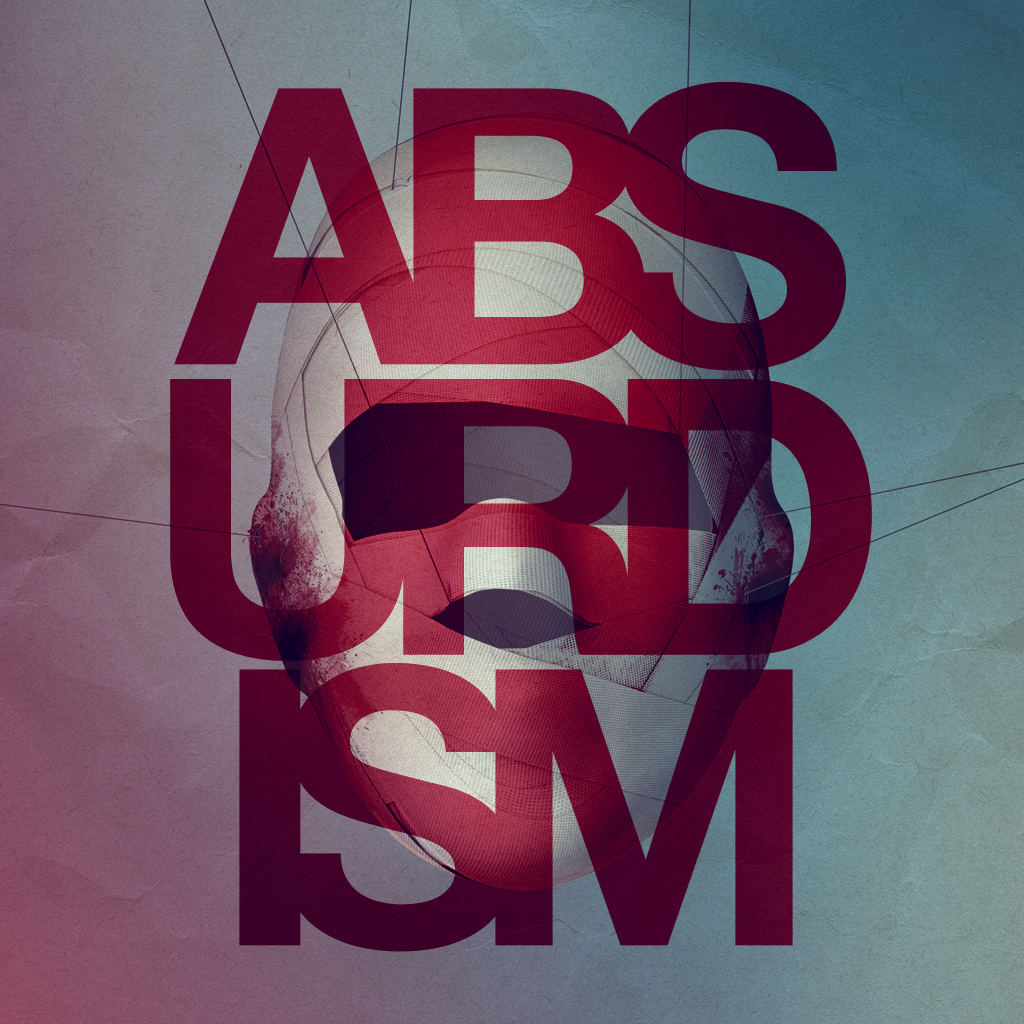
Don’t Be Absurd! Why I’m Not a Huge Fan of Absurdism
Existentialism in all its forms (existential, scientific, religious or atheistic) affirms the individuality of an individual as the end and beginning of everything. Absurdism, as a movement, rejected traditional and secularist progressivist accounts of the fate of man. It expressed the condition of individual as it is, not as it should be. Man, according to…
An Entity in Constant Flux: Preformationism, Genomes and A Process Ontology for Biology
One of the deepest problems in biology is to explain development, the process by which organisms reliably grow into organisms of the right kind. Dogs give birth to puppies not snakes or cabbages. Preformationism, a solution to this problem often illustrated by quaint seventeenth century pictures of tiny babies squatting in the head of a…