So I’m doing a new podcsast and the first episode is now out! The show is a talk-show format and, full disclosure: I’ve never done a talk show before. I wasn’t as prepared as I should have been, plus I was nervous because we were broadcasting live, so It’s a little shaky in places,…
Category
Philosophy
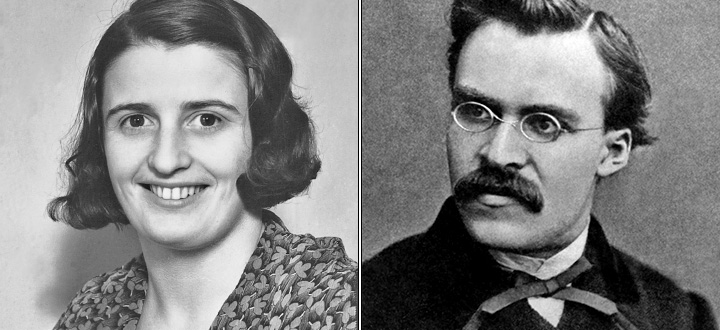
The Best Kindergarten of Communism Possible: Ayn Rand, Nietzsche, and Conservatism
“But Nietzsche’s influence saturated Rand’s writing in a deeper way, one emblematic of the overall trajectory of the right since its birth in the crucible of the French Revolution. Rand was a lifelong atheist with a special animus for Christianity, which she called the “best kindergarten of communism possible.” Far from representing a heretical tendency…
Each Of Us Know Different Things: Epistemological Approaches to Quantum theory
“To see why the quantum state might represent what someone knows, consider another case where we use probabilities. Before your friend rolls a die, you guess what side will face up. If your friend rolls a standard six-sided die, you’d usually say there is about a 17 percent (or one in six) chance that you’ll…
Underdeveloped Truth and Image Based Digital Communication Is a Bad Combination: More Thoughts on “Post-Truth”
“The idea is the same: Truth is not found, but made, and making truth means exercising power […] The reductive version is simpler and easier to abuse: Fact is fiction, and anything goes. It’s this version of critical social theory that the populist right has seized on and that Trump has made into a…
Post-Truth? More like Pre-Modern Truth.
“Let’s take a look at this post-truth meme, this word of the year which the Oxford Dictionary defines as: ‘Relating to or denoting circumstances in which objective facts are less influential in shaping public opinion than appeals to emotion and personal belief.’ Now, I would argue that the mode of communication and influence that they’re…
But The Parts of Our Bodies Are Not Just Connected Through Physical Mechanisms: Panpsychism and the Combination Problem
“…the elements or constituents of organisms are related to each other in two basic ways—through external (physical) relations and internal (nonphysical) relations. The external relations are studied in physics, and involve the four forces of electromagnetism, strong and weak nuclear, and gravity. These forces bind physical components together. But the parts of our bodies (cells,…
On Daniel Dennett’s “sort of” Theory of Consciousness
“[Daniel Dennett] regards the zombie problem as a typically philosophical waste of time. The problem presupposes that consciousness is like a light switch: either an animal has a self or it doesn’t. But Dennett thinks these things are like evolution, essentially gradualist, without hard borders. The obvious answer to the question of whether animals have…
You must always have content and context – foreground and background.
“In order for anything to exist it has to exist in relationship to something else. This is an important part of the core character of American Pragmatism. We live in a world of relationships. As I said before, things do not exist except in relationship with other things. In fact, things do not exist at…
Let The Absolute Bury The Absolute: William James on Monistic Idealism
“The sum of it all is that the absolute is not forced on our belief by logic, that it involves features of irrationality peculiar to itself, and that a thinker to whom it does not come as an ‘immediate certainty’…is in no way bound to treat it as anything but an emotionally rather sublime…
The Parochial Right: Dave Rubin, Free Speech, and “Classical Liberalism”
“Once causes are determined, then there is talk of social injustice and the privileged begin to resist.” –Gustavo Gutiérrez I recently watched a video called Why I Left the Left featuring comedian and talk show host, Dave Rubin, who seems to be popular among clever, secular, atheist (in the worst sense), libertarian “free-thinker” types (Rubin…