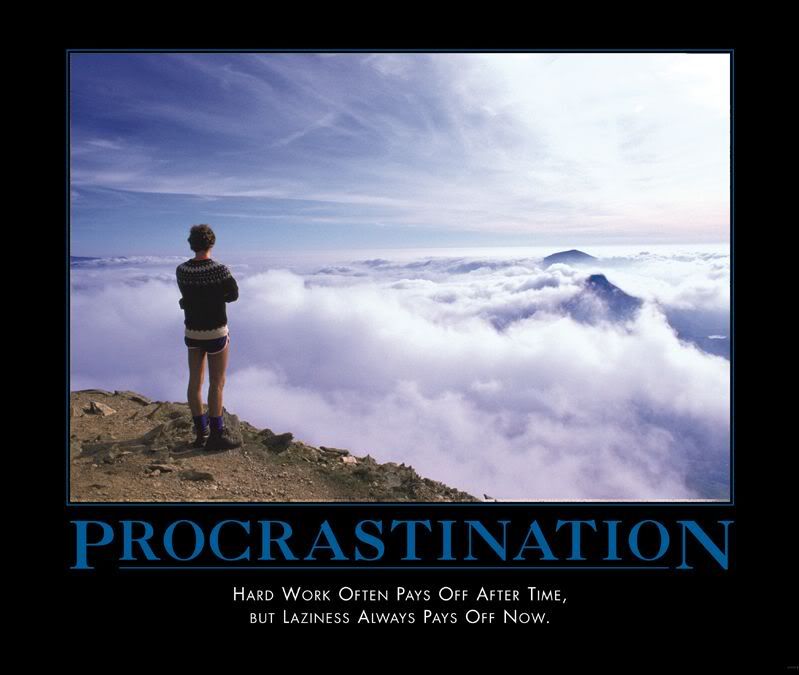
This is sometimes called present bias – being unable to grasp what you want will change over time, and what you want now isn’t the same thing you will want later. Present bias explains why you buy lettuce and bananas only to throw them out later when you forget to eat them. This is why when you are a kid you wonder why adults don’t own more toys.
Present bias is why you’ve made the same resolution for the tenth year in a row, but this time you mean it. You are going to lose weight and forge a six-pack of abs so ripped you could deflect arrows.
You weigh yourself. You buy a workout DVD. You order a set of weights.
One day you have the choice between running around the block or watching a movie, and you choose the movie. Another day you are out with friends and can choose a cheeseburger or a salad. You choose the cheeseburger.
The slips become more frequent, but you keep saying you’ll get around to it. You’ll start again on Monday, which becomes a week from Monday. Your will succumbs to a death by a thousand cuts. By the time winter comes it looks like you already know what your resolution will be the next year.
Procrastination manifests itself within every aspect of your life.
Above is an excerpt of a fascinating article by David McRaney (go read it). In the article, McRaney discusses the impulse that we all seem to have at one time or another, to procrastinate.
I’m extremely fascinated by all of this, specifically this idea of “present-bias.” In all honesty, I admit that I am a big procrastinator, and I also admit to having a bias toward living in the present. It seems to me that as I’ve aged I’ve come to realize that the only thing that is real is this present moment, the “right now,” as it were. So reading that present-bias is somehow tied to procrastination was confusing and a tad disconcerting for me. I would never have made the connection between living in the present moment and procrastination.
Thankfully McRaney does not feel that there is anything bad or wrong with living in the moment. In fact, as far as I can tell, the argument that McRaney makes is that people idealize their future, constructing a fantastical place where chores get done, deadlines get met and New Years resolutions are kept. In other words, people treat the future as a dumping ground for edifying things they know they should do in the present, opting instead to pursue more immediately gratifying activities.
This of course can all be explained by evolution. Our primitive instincts to survive in the now, override our rationality. Our ancestors it seems had no concept of the future, and why should they? When they were being hunted down by saber toothed tigers and trying to survive the harsh realities of nature, all that matters is getting through the day. For our primitive ancestors, there was no need to think about the future because there was a more than real chance there would be no tomorrow.
So I think a good way to sum up the article (and the studies it references), would be to say this:
THE FUTURE IS NOW.
What we do now, i.e. the choices we make in the present, will determine our future.
One of my favorite things about Science (and one of my biggest peeves) is how again and again, conclusions, theories and studies spring up about stuff that, in a sort of intrinsic way, we already seem to know. It goes without saying that we need these sort of in-depth studies and analyses to gain deeper understandings of these sorts of issues, no doubt.
Nevertheless, I’m reminded of the wisdom of those who came before. For example, the Bible is full warnings against procrastination and urgings to live a full and abundant life in the present. A few passages that come to mind are:
Matthew 25:1-13, Jesus’ parable of the 10 virgins.
Matthew 5:23-25, Jesus’ teaching about reconciling with someone who has been offended and settling matters quickly with your adversary.
James 4:13-14, James writing about how life is “a mist that appears for a little while and then vanishes.”
Ephesians 4:26, Paul’s famous decree to not let the sun go down why you are still angry.
Proverbs 13:4, A sluggard’s appetite is never filled, but the desires of the diligent are fully satisfied.
Lastly, perhaps the quote that best gets to the heart of the matter comes from Thomas Jefferson:
Never put off till tomorrow what you can do today.