“The Fair Labor Standards Act of 1938 set maximum hours and minimum wages for most categories of workers…These and other measures protecting workers and the public came to be known as the social “safety net”. In this analogy, the participants in the capitalist system are like acrobats swinging on a trapeze far above the floor…
Posts Tagged
economics
Life Should Be Cooperative, Not Competitive: Permaculture, Design, and Economics
In the economy we have constructed, more importance is placed on the invented world of products and currency than on the real, natural world. In this system our value as humans is determined by how much stuff we have. But no natural systems function this way. Natural systems do create greater abundance as they develop,…
Humans, Robots and Value Theory
“We use machines to make our labor more productive. Productivity is a measure of the amount of use-value created in a span of time. Since, for Marx, value is determined by labor time an increase in productivity (in use-values) does not create a corresponding increase in value. The same amount of value is created, just…
Lack of Food is Not The Only Reason People Go Hungry: Thoughts on GMOs
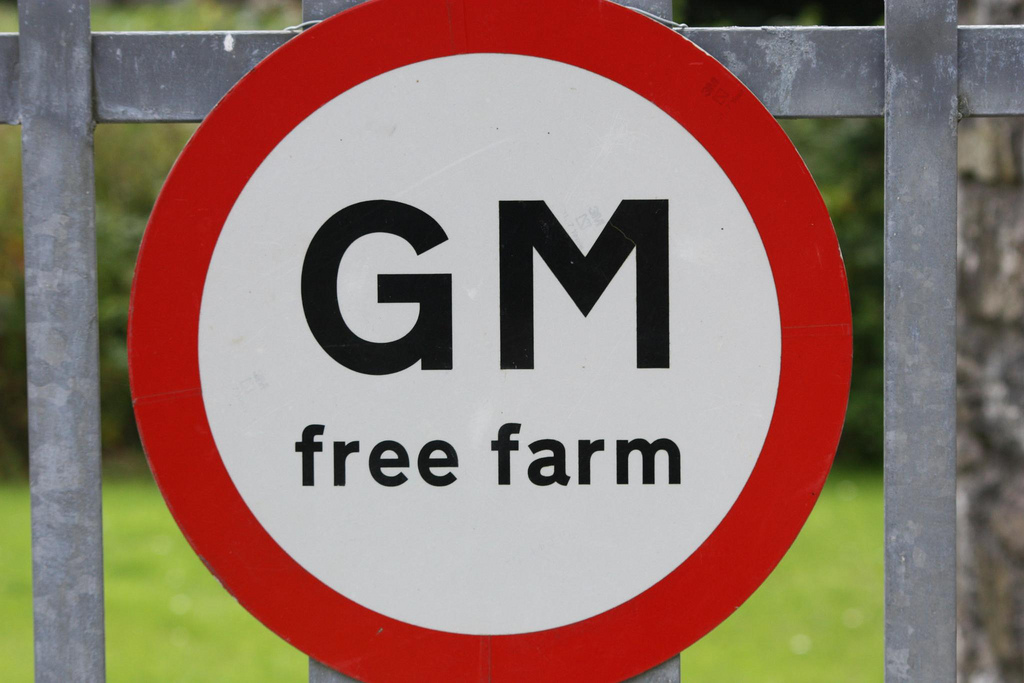
The world has a surplus of food, but still people go hungry. They go hungry because they cannot afford to buy it. They cannot afford to buy it because the sources of wealth and the means of production have been captured and in some cases monopolized by landowners and corporations. The purpose of the biotech…
Producing in an Inhuman Way – or – Why Does Work Suck So Much?
“Marx’s innovation was to combine Smith and Feuerbach to derive an account of alienated labour. That is, the plight of the worker under capitalism is an instance of the way in which a person’s essence becomes detached from his or her existence; i.e. that workers live in a way that does not express their essence….
The final destination is nothing. The Movement is everything. // The Nordic Model of Social Democracy
Einar Gerhardsen, Prime Minister of Norway for most of the period between 1945 and 1965, once claimed there were two principal lessons he had learned from his time in government. …there will always be conflicts in a democratic society: between workers and employers, between the majority and groups who view themselves as marginalized, or between…
Fairs, Festivals & Finance: Confessions of Naiveté
“The ideas of economists and political philosophers, both when they are right and when they are wrong, are more powerful than is commonly understood. Indeed the world is ruled by little else. Practical men, who believe themselves to be quite exempt from any intellectual influence, are usually the slaves of some defunct economist.” –John Maynard…
Economic Bug Fixes – Jaron Lanier, Who Owns the Future?
You might, for example, want to design a tablet to be pristine and platonic, without any physical buttons, but only a touchscreen. Wouldn’t that be more perfect and true to the ideal? But you can’t ever quite do it. Some extra physical buttons, to turn the thing on, for instance, turn out to be indispensable….
Richard Wolff Explains The Delusion of Regulation
Broadly defined, the government intervenes economically by regulating the economic interactions among and between enterprises and individuals. It does this by taxing their activities (earning income, owning wealth, spending money, and so on) and by making rules governing those activities. However, the real contents and effects of government regulations depend on the interests that govern their design and implementation….
Money-Theism: Joerg Rieger Explains How Economics is an Odd Sort of Religion
Part of the problem with the current economic crisis is that economics is based on an odd sort of faith, expressed tongue in cheek by the term “money-theism,” which has been popularized by comedian Stephen Colbert. There are a few big faith claims, like the ideas that economic deregulation always promotes growth, that tax cuts for powerful corporations…