“This is what Deleuze saw in Whitehead: that, in a creative world, “unification” is always “multiplication”—the creation of folds of difference. Any attempt to freeze this movement produces imperialism, that is, the “will to power” to conquer manifoldness. But the imperial desire for a “perfect” world “under control” only earns a dead world. It was…
Category
Theology
Omnipotence Cannot Simply Wash its Hands of Evil
“In order to show solidarity with the weak, God voluntarily empties Godself of power, freely chooses not to exercise this power, and this divine kenosis does not contradict omnipotence but manifests it. I do not travel down that path because it smacks of a ruse, a kind of docetism, in which weakness is an even…
Theopoetics: Embracing the Mystery
Theopoetics guides a literary artist toward contextualizing experience and shepherds the intangibility of experience into art, turning confused isolation into a reach for the communal, all with an eye toward faith, hope, and love — charity in its true sense. It’s this act of making incarnate coupled with the intention of pursuing the divine that…
Confronted with Questions That We Cannot Answer: Clayton, Whitehead, Barad, Panagentialism, & Pneumaterialism
“As even Clayton himself has argued, there are “questions that science raises but cannot answer using its own resources.” In particular, he views quantum physics “as notorious for confronting us with philosophical questions that physics itself may never be able to answer…” This is where what Clayton calls a “hypothetical, pluralistic” metaphysics (like Barad and…
For a deep understanding of reality, mix equal parts: science, philosophy and religion.
Critical to my approach is the need to maintain the ethic that keeps integral philosophy free from religious bias. Although integral philosophy has a strong spiritual component, its spirituality is broad enough to include a wide diversity of spiritual beliefs because it is careful to minimize its reliance on metaphysics. Like the three legs of…
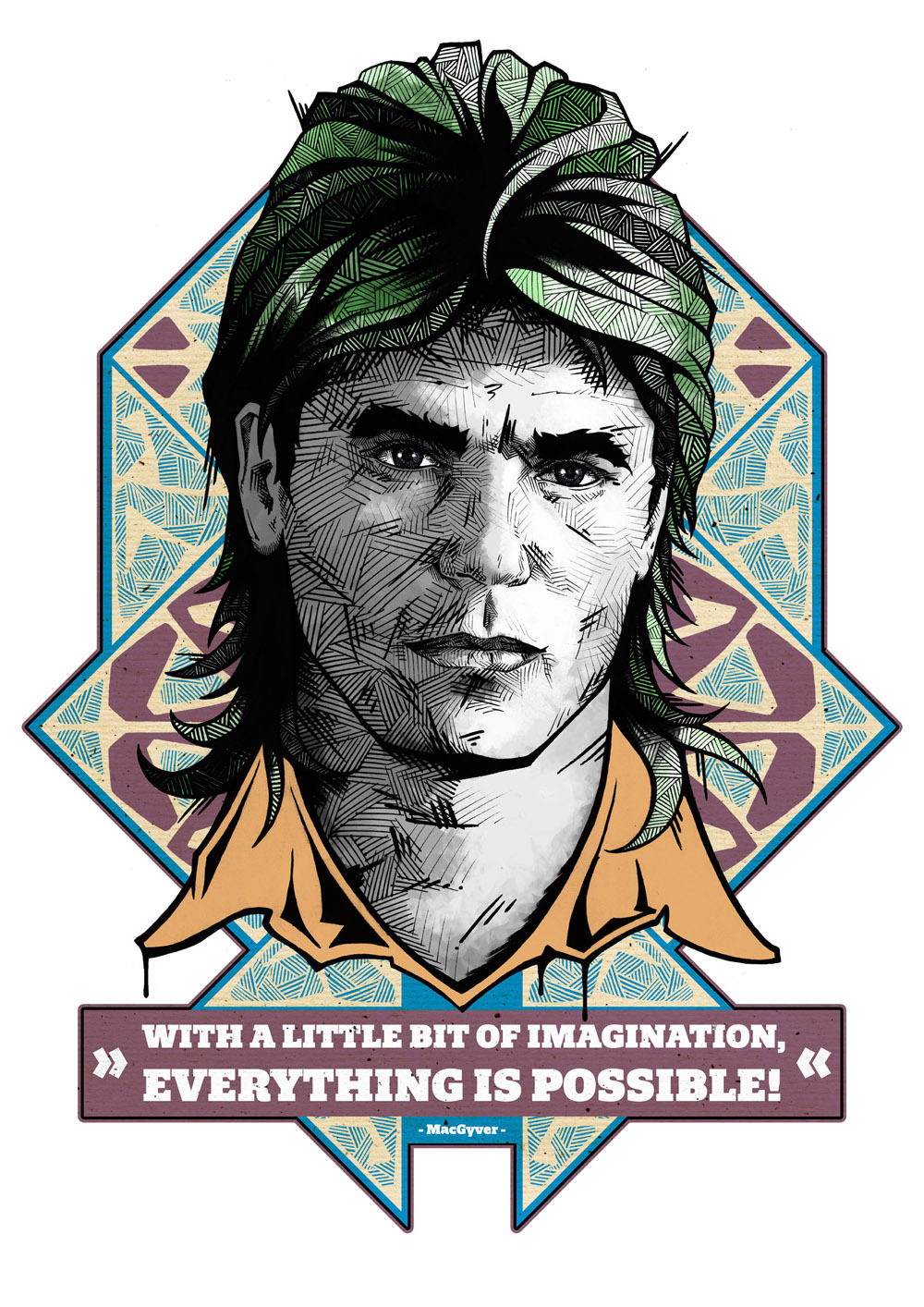
With Imagination, Anything is Possible: Process Theology, MacGyver and Creative Non-Violence
Does God ever call us to injure other people? Again, I think the answer is affirmative. If killing Hitler could have stopped the Holocaust and shortened the war, Bonhoeffer was right to support that project. On a much lesser scale, Jesus used violence to cleanse the temple. Whitehead pointed out that “life is robbery.” For…
What you make out of what you have received is who you are // More Bernard Loomer – on Self-Creativity
“In the relational viewpoint you begin life as an effect produced by the many others in the world of your immediate past. But you are not simply a function of these relations. You are an emergent from your relationships; and in the process of your emergence you also create yourself. Your life as a living…
What S-I-Z-E is your soul? Bernard Loomer and Depth of Love
“Loomer is an important figure in process theology, a movement that contends that the universe is always growing in size and complexity, and that as the universe grows, so does God and so must we. Loomer saw the increasing complexity of creation as a glorious blossoming that God was delighted to behold. Late in life,…
Is There a Dignified Kind of Death?
My friend Toy recently asked me to participate in a bioethics survey for one of his grad courses. It was fun. Here’s a snippet: Q: In Oregon there is a legal act known as Death with Dignity Act; this states that under four conditions one is legally permitted to be prescribed a drug that will…
Personal God or Transpersonal God?
Bill Eckert: Do any of you hold a non-personal view of God? If so, is your worldview distinct from naturalism? Jay McDaniel: Bill, my own view is that God can meaningfully be conceived in both personal and transpersonal terms, and that there is a continuum between the two poles. I myself sometimes speak of…