“One example of this mode of perception, or ‘prehension,’ is our awareness that our sensory organs are causing us to have certain experiences, as when we are aware that we are seeing a tree by means of our eyes. Such prehension, while presupposed in sensory perception, is itself non sensory.” —David Ray Griffin I made…
Category
Philosophy
The Desacralization of Nature: Western Esotericism, Western Techno-Science and Consumer Capitalism
According to McGrath, though the esoteric schools represent a diverse set of theories and practices, they are nonetheless “united by a common enemy: the desacralization of nature (material nature, human nature, cosmological nature) by techno-science and capitalist consumerism.” He argues that critiques of esotericism as “regressive,” “anti-modern,” and “anti-scientific” are misguided. Although esotericism shares modernity’s…
SpoOoOky Action at a Distance: Parapsychology, Occultism, Mechanistic Philosophy and How Miracles Became Super-Natural
At the center of the new philosophy of nature that emerged victorious in the 17th century was a mechanistic doctrine of nature. This position was, in fact, often referred to as the “new mechanical philosophy.” This view of nature had two fundamental dimensions, both of which exemplified the demand that all “occult” qualities and powers…
Every Seed Is Awakened: Why I’m Not Vegan or Vegetarian (Yet)
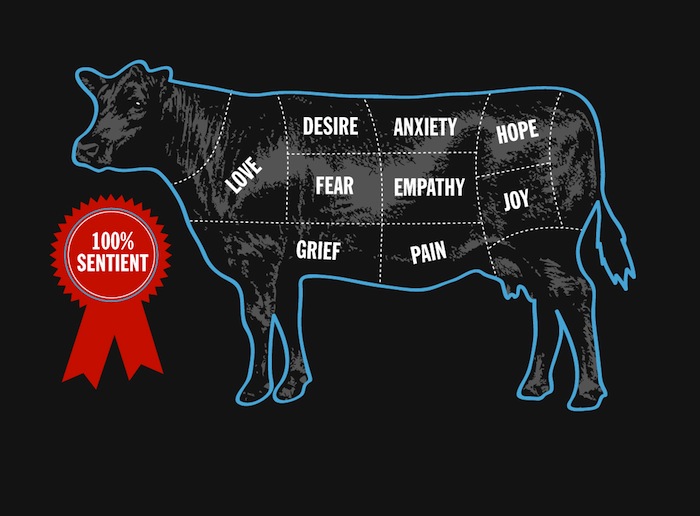
“If you are a feminist and are not a vegan, you are ignoring the exploitation of female nonhumans and the commodification of their reproductive processes, as well as the destruction of their relationship with their babies; If you are an environmentalist and not a vegan, you are ignoring the undeniable fact that animal agriculture is…
Firece Egalitarianism & The History of Human Sexuality
One of my new favorite podcasts is comedian Moshe Kasher’s “Hound Tall Discussion Series,” where three comedians interview an academic expert (Warning: it’s not a show for those with sensitive ears!). It’s the best combination of intellectual satisfaction and hilarious non-sense on the internet. In episode two, the expert featured was psychologist and expert on…
In Defense of Prayer and Interiors
While listening to the latest TNT episode with Two Friars and a Fool (TFAAF) on why we should never pray again, I kept thinking over and over to myself that this is such interesting stuff. Just asking the question ‘what is prayer?’ is so much fun. It’s really important stuff to think about, and I…
Thought Experiments and Taking a Strong Stand: Two Ingredients
Here are two things I’ve been thinking about that would be really good ingredients for a tasty theological dish. Ingredient #1: This interview with Yale Philosopher Keith DeRose. In it he basically says two things that caught my interest: 1) Neither atheists nor believers know (at all) whether God exists. I agree. 2) there’s still…
Is it possible to find out about the world by making things up? Catherine Elgin, Exemplification and Understanding
“One attractive answer is that works of fiction are thought experiments. Like literary fictions, thought experiments neither are nor purport to be physically realized. Nevertheless, they evidently enhance understanding of the phenomena they pertain to. If fictions are thought experiments, they advance understanding of the world in the same way that (other) thought experiments do.”…
It’s Never Been Possible to Escape Metaphysics
Whether they like it or not, continental philosophers have to come to terms with the fact that metaphysics has made a comeback. It’s on the program at SPEP and there are plenty of book, articles, and events covering the new developments. At this point, however, I’m not sure that I (or anyone else) needs to…
You’ve got to admit, reason itself is quite mysterious.
You’ve got to admit, reason itself is quite mysterious. Might it not even be referred to as supernatural? The knowledge gained by the scientist, if true, cannot without contradiction be collapsed into nature. How is it that the rational scientist claims the universe entirely lacks purpose and intelligence? What of the scientist’s own intelligence? Is…