
Each Occasion is Concerned With The Universe: Virtuous Oscilation, Whitehead, and Quaker Concernedness
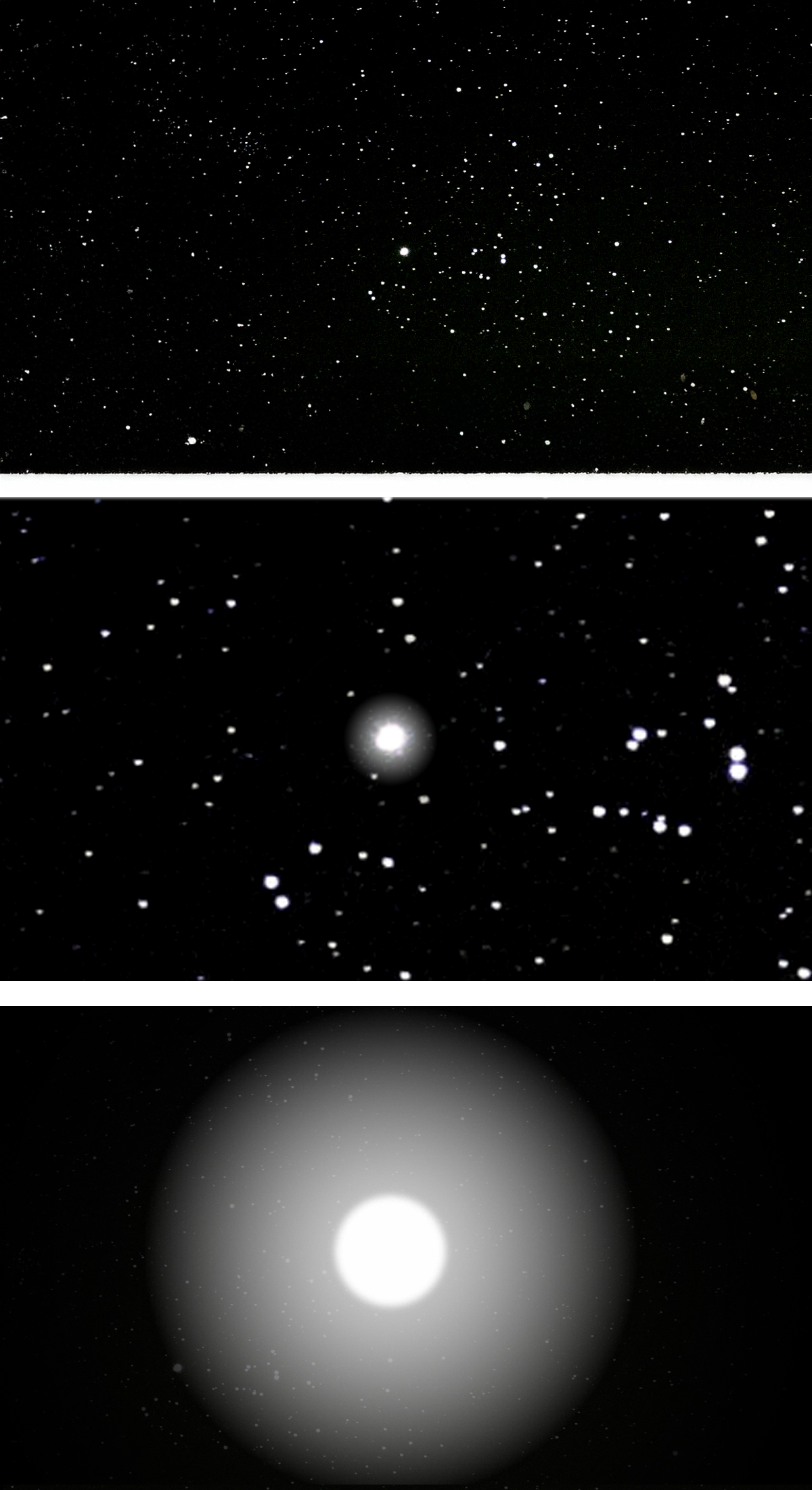
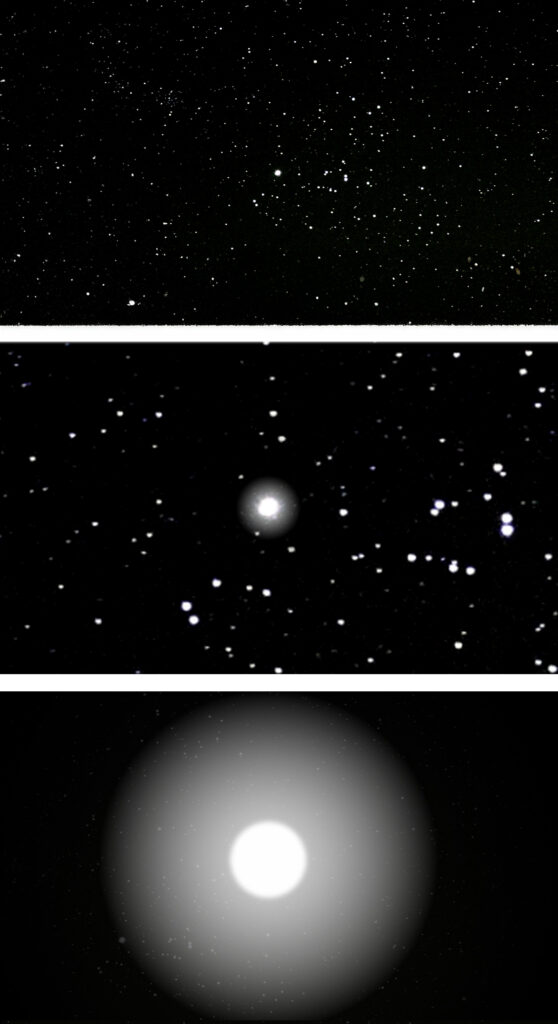
“Consciousness flickers; and even at its brightest, there is a small focal region of clear illumination, and a large penumbral region which tells of intense experience in dim apprehension.” –Whitehead, Process and Reality
“An exemplar can exemplify only some of its properties. It brings those properties to the fore by marginalizing, downplaying, or ignoring other properties it instantiates…Moreover, an exemplar is selective in the degree of precision with which it exemplifies.” –Catherine Elgin
“Concernedness is the essence of perception” –Whitehead, Adventures of Ideas, pg. 232
As usual I continue to be inspired by all of the related lures to feeling that I encounter day to day and moment to moment in life. Most recently I have enjoyed philosopher, Tripp Fuller’s, essay on Whitehead’s Religion in the Making (find his RITM reading group here) which is exceedingly relevant for me as I continue to think with Henri Bergson about how we tend to narrow our scopes of concern and reflect on the role that this psychic distancing plays in the aesthetic experience of beauty in art and nature as I slowly read through Steve Odin’s great book, Tragic Beauty in Whitehead and Japanese Aesthetics. Indeed, the inspirational autumn season here in Pennsylvania has been lush with ephemeral beauty, the komorrebi (sunlight filtering through leaves) on full display. And as the days grow shorter and we approach the cold darkness of Winter, I can’t think of a better time time to explore the significance of the mysterious ‘penumbral shadow’ metaphor in Whitehead’s philosophy of organism (via Odin) and, while we’re at it, try to connect it to the virtuous oscillation exemplified by Quaker Mysticism. *Cracks Knuckles* Let’s dig in!
The Penumbral Shadow
One of the most fascinating and radical aspects of Whitehead’s thinking, for me, is that he suggests the world is founded on aesthetic experience and that moral order is then derived from this. In Religion in the Making Whitehead says it this way:
“The metaphysical doctrine here expounded finds the foundation of the world in the aesthetic experience. . . . All order is therefore aesthetic order, and the moral order is merely certain aspects of the aesthetic order, and the aesthetic order is derived from the immanence of God (1960, p. 116).”
Something very important to Whitehead’s philosophy is that every ‘actual occasion of experience‘ (and btw, nothing gets more REAL for Whitehead than these ‘actual entities‘) is a creative synthesis: a unification of multiple prehensions / feelings, into a novel act of feeling and value. Each entity that exists in the world is, in other words, a microcosm of the macrocosm. Odin helpfully describes this process of creative synthesis (or ‘concrescence‘ to use Whitehead’s term) as “…the creative process whereby the past many are unified into a new one.“
Cool right? Here is the problem: even though we may be prehending or feeling the entire universe there is just no way in hell we can focus on everything with equal clarity (i.e. humans can’t multitask). A major influence on Whitehead, William James, points this out as well:
“Millions of items of the outward order are present to my senses which never properly enter into my experience. Why? Because they have no interest for me. My experience is what I agree to attend to. Only those items which I notice shape my mind—without selective interest, experience is an utter chaos. Interest alone gives accent and emphasis, light and shade, background and foreground intelligible perspective, in a word. It varies in every creature, but without it the consciousness of every creature would be a gray chaotic indiscriminateness, impossible for us even to conceive.“
We are always making creative decisions about what to focus on and when, just as the painter does when rendering a pear on a canvas. The structure of aesthetic experience (for Whitehead, according to Odin) involves a contrast between foreground and background: The foreground consists of clear, distinct, articulated sense-objects, or the “Appearance” of things. The background consists of the vague, massive, non-articulated causal field which doesn’t appear clearly but is felt. In his paper on this topic, Odin explains it this way:
“The word “penumbra” etymologically derives from the Latin prefix paena meaning “almost” added to the noun umbra meaning “shadow.” Whitehead’s recurrent notion of a “penumbral shadow, in its sense as a halo of faint darkness which envelops the clearly illuminated focal regions of consciousness, functions in the context of his writings as an organismic metaphor for expressing the undivided continuity, interfusion, and wholeness of the perceptual field as well as the beauty intrinsic to all phenomena by virtue of their hidden depths. Hence, Whitehead’s organismic metaphor of a penumbral shadow is important not only to his general phenomenology of perception, but also to his concept of aesthetic experience as well as the function of art and the structure of beauty.”
Considering all of this it makes complete sense that one of the functions of art, Whitehead says, is to bring the background in to “haunt” the foreground. In other words, aesthetic value is elicited through patterned contrast. This means that an experience reaches its greatest depth and richness when it brings together striking contradictions. On one side is the focused, sharply defined foreground—narrow and limited in scope, yet capable of clear expression. On the other side lies the diffuse background, broad, indistinct, and largely unnoticed in its hazy uniformity. Think of it as a small jewel held up against an endless night sky: the tiny, exact thing we’re attending to, set against the vast field of feeling that we don’t fully grasp but still somehow sense. The foreground is narrow enough to be named and noticed (the jewell); the background stretches wide, diffuse, almost anonymous (the endless night sky). And, according to Odin and Whitehead, it’s precisely in their meeting—this dance between what’s right here and what hovers just beyond reach—that our emotional life deepens. The sharpness gives form, the blur gives weight, and together they let experience ring with its fullest resonance.
So to sum up, we might say that human experience is a constant negotiation between focus and periphery and the “penumbral shadow” is the ever-present, felt whole of reality. From this, then, I will suggest that our existence is in part (if not largely) defined by how and when we narrow our scope of concern within it.
Concernedness and The Virtuous Oscillation of Quaker Mystics
Someone who may argue in accordance with this idea that organisms are always selecting what to bring into our little perimeters of concern is epistemologist and philosopher of art and science, Catherine Elgin, who views human understanding as a non-foundational, holistic, and ongoing process of refining our commitments. As Elgin explains in her wonderful essay on exemplification, “When an item serves as a sample or example, it exemplifies: it functions as a symbol that makes reference to some of the properties, patterns, or relations it instantiates.” For Elgin, the primary role of exemplification is to advance understanding. By making patterns, properties, and relations perceptible, exemplars serve as “samples” that we can study to grasp broader categories, theories, or moral truths. Even scientific experiments, Elgin argues, are “vehicles of exemplification“ — she writes: “they [scientific experiments] do not purport to replicate what happens in the wild. Instead, they select, highlight, control and manipulate things so that features of interest are brought to the fore and their relevant characteristics and interactions made manifest.”
Fascinating. Let’s continue to bring some interests for the fore, shall we?
When thinking about this type of virtuous oscillation which we’ve been discussing I am led to ask the question: who, if anyone, can we point to that might exemplify a type of virtuous dynamic capacity to engage the world with what we can call the appropriate emotional and attentive response at any time? What would that look like? If we conceive of our experience as a constant negotiation between a narrow focus and a vast, felt periphery, then our very way of being in the world might become a matter of aesthetic and, therefore, ethical choice. We are always, inevitably, taking account of things and deciding/selecting what to bring into the clear light of concern and what to leave in the blur of the penumbral shadow, a practice that really does end up shaping our realities. Whitehead himself, in Modes of Thought, uses the Quaker term “concern” to characterize this activity (which I obviously love):
“The emotion transcends the present in two ways. It issues from, and it issues towards. It is received, it is enjoyed, and it is passed along, from moment to moment. Each occasion is an activity of concern, in the Quaker sense of that term. It is the conjunction of transcendence and immanence. The occasion is concerned, in the way of feeling and aim, with things that in their own essence lie beyond it; although these things in their present functions are factors in the concern of that occasion. Thus each occasion, although engaged in its own immediate self-realization, is concerned with the universe.”
To understand its full mystical weight, we should dig deeper. As discussed by John Hall in their article on the subject, a Quaker “Concern” is not merely a personal interest or a vague feeling of worry. It is a specific, persistent prompting, understood to be from God, that calls a person to a particular course of action. It is, as Hall states, “a divine nudging that won’t go away,” a “burden of the soul” that demands to be acted upon. This Concern requires both deep, solitary listening—to discern the call in the first place—and a movement into the world to address it. Critically, it is tested and affirmed by the community, the “meeting,” which helps discern its authenticity and offers support. This process ensures the Concern is not mere eccentricity (definitely a danger in my case, lol!) but a genuine calling toward healing a part of the world.
As Fuller discusses in his essay on Religion in the Making, solitariness is the essence of religion. Tripp writes beautifully:
“At the core of religious experience is the individual person confronting—alone, in their own irreducible selfhood—the mystery and immensity of existence. It’s you, facing the cosmos, asking: Who am I? What am I doing here? What matters? […] But—and this is equally important—solitariness doesn’t stay isolated. It opens into what he [Whitehead] calls “world loyalty.” The solitary encounter with ultimate reality doesn’t turn you inward forever. It turns you outward, toward the world, toward others, toward justice and compassion.”
This inward/outward movement being described (which I’m calling virtuous oscillation) is Quaker concernedness in its most potent form and it teaches us that the solitary, focused perception of a divine value, the “concern” or “lure” put on our hearts that we might obsess over (for instance in my particular case this takes the shape of Christian nonviolent anarchism quite a bit and, at the moment, I’m quite concerned/obsessed with this Chinese folk song by Lily Chao lol), must flower into public, wide-angled action. The mystic, saint or sage, then (as Fr. John Dear likes to say) is not one who escapes the world through solitude, but one whose solitude grounds a more profound and unshakeable solidarity with the world—a true “world loyalty” born from a spiritual imperative.
If, as Whitehead suggests, moral order is derived from aesthetic experience, then aesthetic taste might have moral implications. The Quaker’s “concernedness” is not merely about grand, world-changing actions, of course, but also about the spiritual discipline of our daily attention. Every choice of focus—from the obscure Chinese folk song that haunts my days to the news we consume or the quiet we keep—can be viewed as a small but real act of world-making. These are not neutral entertainments, they are the spiritual exercises by which we train our capacity to either feel the world or to numb ourselves to it. What we bring into the clear foreground of our concern and what we relegate to the blur of the penumbral shadow may very well shape who we are, determining whether we become people who can be “fellow-sufferers who understand” or those who pass by on the other side.
As winter’s shadow falls, may we curate our inner and outer landscapes with care, understanding that the beauty we cultivate in the smallest moments by doing things like noticing the komorrebi, or appreciating a fine melody, or even heeding the solitary concern for a “little one” by adopting a turkey instead of eating it, may very well be the ground from which a more compassionate and loyal engagement with the world will grow. May it be so.
The act of choosing to focus on one "thing" versus another seems like a creative act. Our aims impact what becomes foregrounded immediately, responded to, and also will be added to the "history" that forms the context and background reality for the next round of subsequent, aim-based focus and creative reality-making.
[…] and framed as the focal point for a holistic, qualitative event. They are no doubt triggers for a virtuous oscillation, from discursive analysis to intuitive fusion, inviting us to inhabit the “suchness” of the […]