
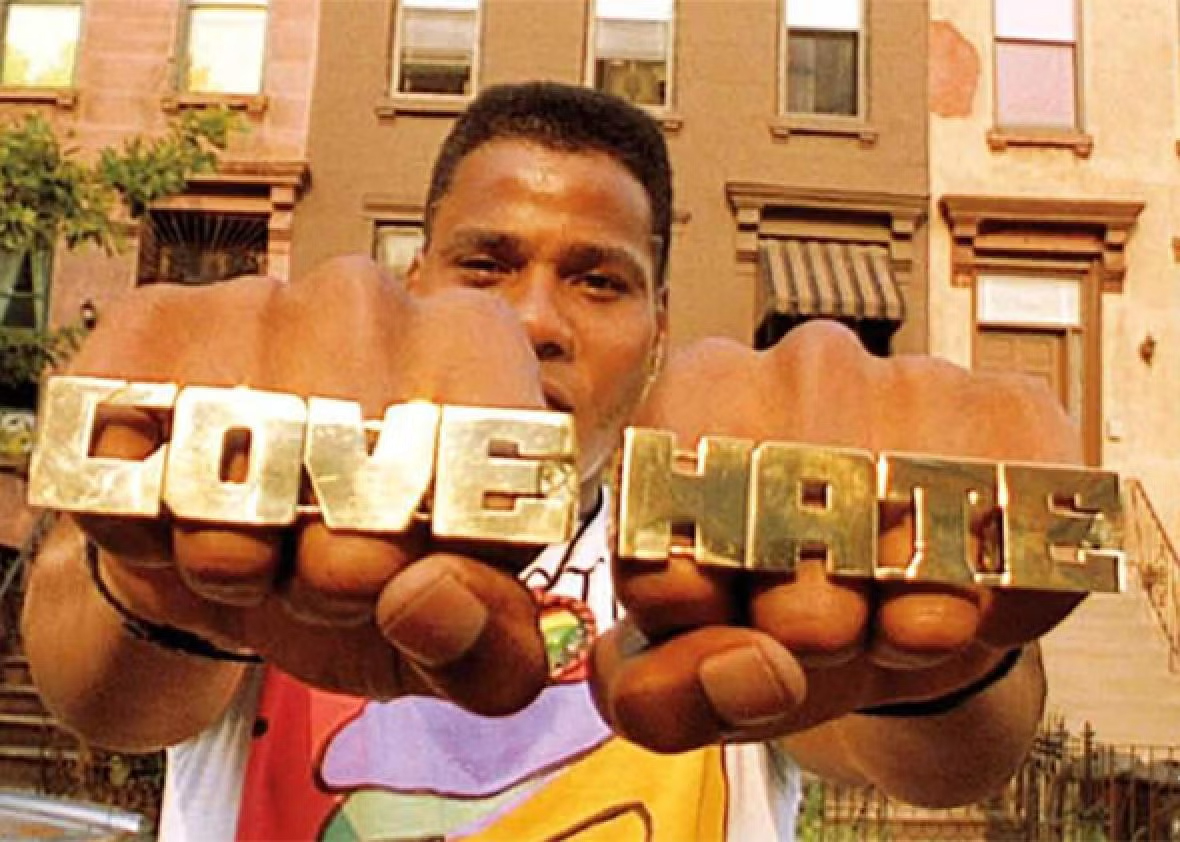
“The choice, as James Cone insists, is that God must be Black; without that commitment, the universal story is not possible, because Whiteness fails to express solidarity with all – and God’s Blackness is about solidarity. For Cone, ‘The blackness of God means that God has made the oppressed condition, God’s own condition.’ Whiteness, instead, deals ‘in abstractions about the love of God, while allowing racism, colonialism and empire to flourish.’ Similarly, then, God the Adult fails to reflect the universal nature of the story, and we must choose the Child.” –Graham Adams, God the Child: Small, Weak and Curious Subversions, pg. 65
“While the idea of blood purity was not a full- fledged concept of race, it blurred theological categories with those that began approximating race and added a new identity marker to the ecclesiastical orders that had previously divided groups of people. Before the invention of a systematic and biological racial taxonomy, this innovation marked a significant shift in the development of white supremacy. These religious and political events suggest public and ecclesiastical practices of supersessionism, functioning to assign Jewishness a racial designation and then replace it through badge or execution with a white, Christian center.” –Kristopher Norris, Witnessing Whiteness: Confronting White Supremacy in the American Church; Ch. 3: The Theological Origins of White Supremacy (pdf)
“My book sheds light on the relatively unexamined complexities of “identificatory love” across racial boundaries, arguing for the crucial role of empathy in fostering anti-racist coalitions. While sympathy can connote a condescending pity that preserves racial hierarchies, empathy has the potential to be a radically destabilizing emotion. Black-authored representations can enable white audiences to look at their own whiteness from the outside in, to read themselves through black viewpoints, and to gain a self-implicating understanding of systemic racism and white-skin privilege.” –Kimberly Chabot Davis, Beyond the White Negro, pg. 4 (pdf)
Something about the illegal and immoral war in Iran that the United States and Israel are currently waging has me once again simultaneously grieving and thinking about the abhorrent pervasiveness of White Christian supremacy. Thankfully, Graham Adams’ book, God the Child, has been at the top of my stack lately and it has certainly been a welcome catalyst for reflection during this difficult time. Adams’ affinity for black liberation theologian, James Cone, is one that I share and reading the passage above reminded me of how important it is to become black with God. In Cone’s words:
“If the oppressed of this land want to challenge the oppressive character of white society, they must begin by affirming their identity in terms of the reality that is anti-white. Blackness, then, stands for all victims of oppression who realize that the survival of their humanity is bound up with liberation from whiteness” (7). “Knowing God means being on the side of the oppressed, becoming one with them, and participating in the goal of liberation. We must become black with God!” (65).”
This call to “become black” is not about a performance or an appropriation. It is about a fundamental reorientation of one’s being toward the reality of the oppressed. It is a theological relocation.
But, to be honest, it’s hard for me to think about this topic of becoming black without spinning like a record on a turntable back to my adolescence in the 1990s. I remember the first time I heard hip-hop: my friend played me some songs from Young MC‘s album Stone Cold Rymin and I experienced an instantaneous moment of pure blissful satisfaction (what perhaps, for some, may be the equivalent of hearing The Beatles for the first time lol). From then on I had found my music and I wanted everyone to know it! No more dumb guitars for me, just really loud window shaking break beats and lyrics please. Of course kids want to dress like their heros’ and I definitely tried; studying cassette and CD covers allowed me to match the hip-hop fashion aesthetic of artists like Tupac, Ice Cube, Wu-Tang Clan et. al, fairly accurately.
However, I also remember something else about that time: the word “wigger.” It was a slur, a pejorative hurled at white kids—in my case always coming from other white kids and, sadly, adults too—who listened to hip-hop, wore baggy clothes, and adopted what was perceived as “black” aesthetics. The accusation, whether spoken or implied, was one of race betrayal and, even with my mixed biological inheritance (Italian, Polish, Slovak, Russian Jew) I was perceived as a traitor to whiteness, and in the same breath, I was a fraud for trying on a culture that wasn’t mine. The critique was valid in its diagnosis of the theft and superficiality, but it was also, explicitly, a policing of the color line. It was a way of saying, “Stay in your lane.” The term didn’t allow for the possibility that the attraction to hip-hop was not just a fetish for “cool,” but a genuine search for a language of resistance, a voice that spoke truth to a power that felt alien and oppressive, even from within the suburban bubble.
This brings me to Kristopher Norris’s chapter on The Theological Origins of White Supremacy which I highly recommend perusing. Reading through it, I realized that the logic of the “wigger” as a betrayer has ancient theological roots. Norris traces the development of whiteness not to the Enlightenment’s scientific racism alone, but to a much older Christian theological project. He pinpoints a crucial moment: the church’s obsession with Jewishness as an indelible mark on the body. Norris writes:
“While the idea of blood purity was not a full-fledged concept of race, it blurred theological categories with those that began approximating race and added a new identity marker to the ecclesiastical orders that had previously divided groups of people. Before the invention of a systematic and biological racial taxonomy, this innovation marked a significant shift in the development of white supremacy. These religious and political events suggest public and ecclesiastical practices of supersessionism, functioning to assign Jewishness a racial designation and then replace it through badge or execution with a white, Christian center.”
Norris teaches us that before race was “science,” it was theology. The concept of “blood purity” in medieval Spain, used to distinguish “true” Christians from Jewish conversos, was a theological innovation. It declared that baptism was insufficient; something in the blood, in the lineage, remained. This is the proto-concept for racial classification. It’s a theological practice linked to the doctrine of supersessionism—the belief that the Church has replaced Israel in God’s covenant—applied to the body. It created a system where identity is fixed, where conversion doesn’t fully convert, and where the “white, Christian center” defines itself by expelling or subjugating the “other.”
The term “wigger” operates on this same twisted logic. It polices the boundary, insisting that whiteness is an indelible state of being that cannot be authentically crossed. It buys into the very racial taxonomy that Christian theology helped invent. It sees a white kid in a rap T-shirt and cries “betrayal” to a racial essence that is, itself, a theological fiction designed for domination.
So, what is the alternative? If we are not to be “wiggers,” and we are not to remain in a whiteness that is the center of a supremacist imagination, then what? In my opinion, this is where Cone’s “becoming black” and Kimberly Chabot Davis’s insights on empathy converge.
Kimberly Chabot Davis, in her fantastic book, Beyond the White Negro, offers a way forward that is not about impersonation but about transformation. Davis writes beautifully:
“Amidst an academic climate of suspicion toward a politics rooted in affect, scholars need to consider empathetic identification fostered by African American literature as a powerful means of deepening the desire to fight against the racism that is our collective burden. While many lament that black culture is being co-opted for profit, they ignore the possibility that some consumers of contemporary African American culture may be internalizing black perspectives and political viewpoints rather than simply imitating black styles.” (p. 110)”
This was certainly the case for me. Before I ever become aware of the conceptual framework known as Critical Race Theory (CRT) or formally learned about the reality of institutionalized racism, for example, I heard about it from groups like Da Lynch Mob and The Geto Boys; honestly, the GBs song Cooked Officer was an eye popping crash course for me in police brutality, corruption, and institutionalized racism. This is Davis’ point. It is not about claiming to be black. It is about allowing one’s self to be “destabilized” by another’s perspective. It is about the painful and necessary process of “looking at [one’s] own whiteness from the outside in.” This is the work of empathy, not sympathy. It is the practice of seeing oneself as implicated in a system of privilege and violence, a system that, as Norris shows, has its very roots in the theology we have inherited.
To “become black with God” is to undertake this empathetic journey. It is to stand in solidarity with the oppressed not as a savior, but as one who has learned to see the world from their vantage point and found it to be true. It is, as Graham Adams puts it, to choose the Child over the Adult. The “wigger” was never the answer. But neither is the white liberal who clings to a colorblind abstraction. The answer, the only answer, is the difficult, destabilizing, and hope-filled work of becoming black with God over and over again—of choosing solidarity over supremacy, empathy over apathy, and the scandalous particularity of the Child over the safe, violent abstractions of the Adult. May it forever be so.