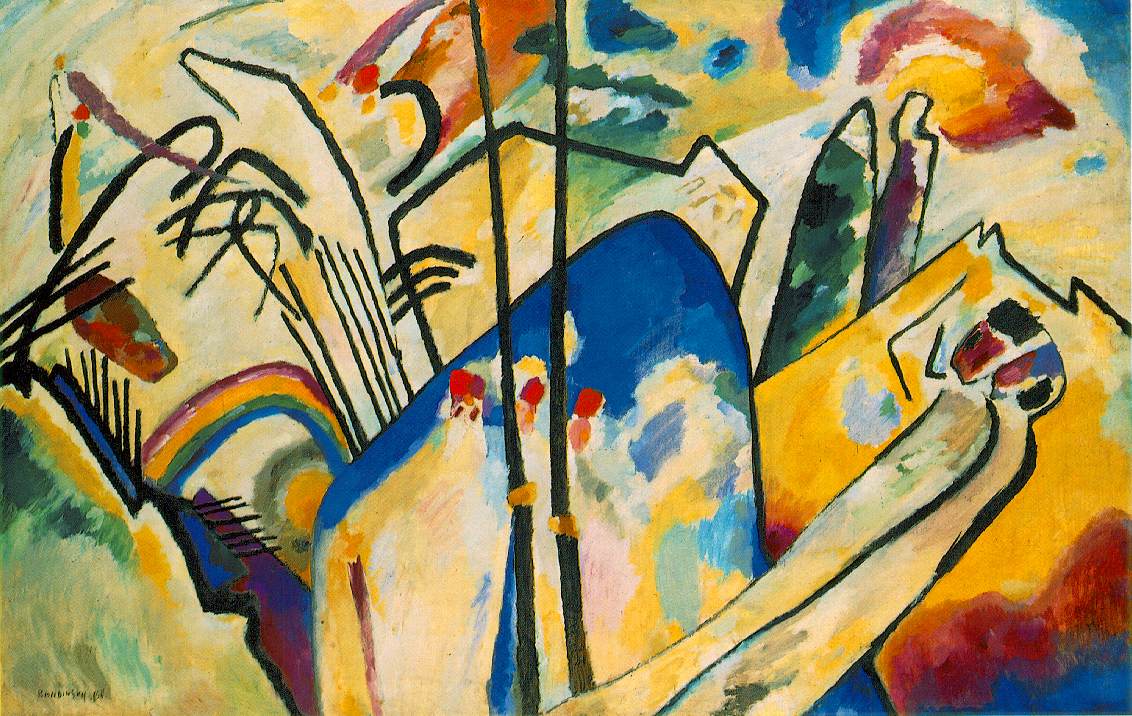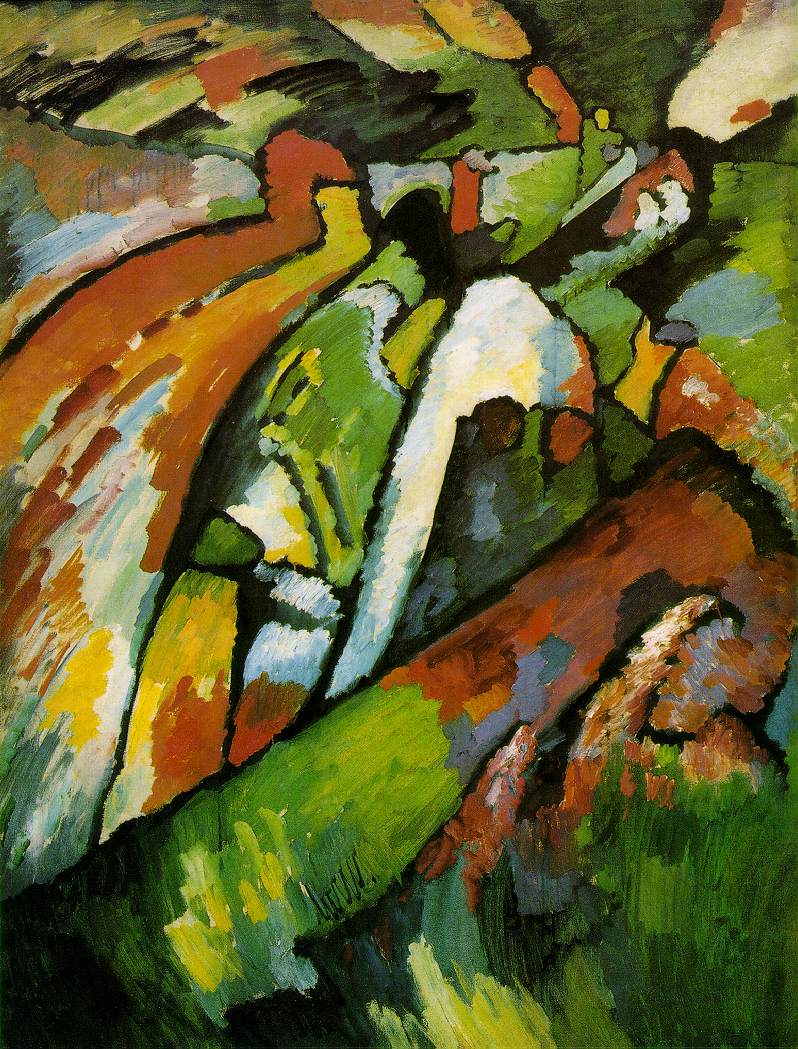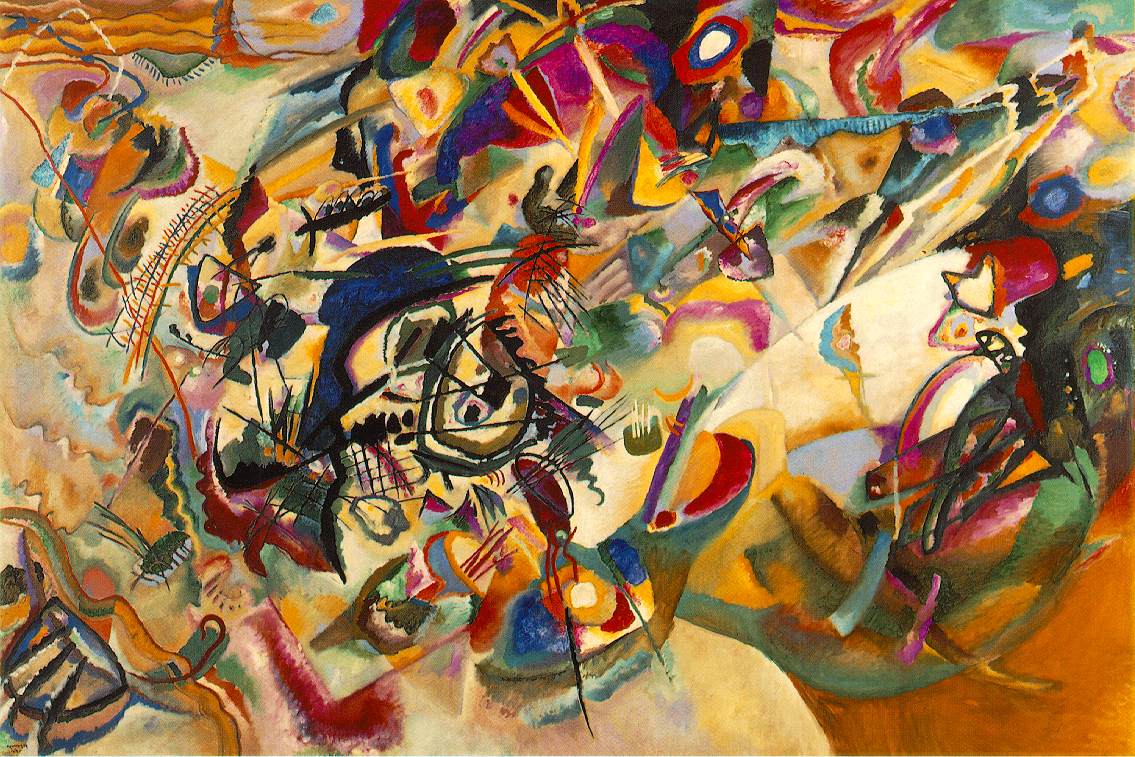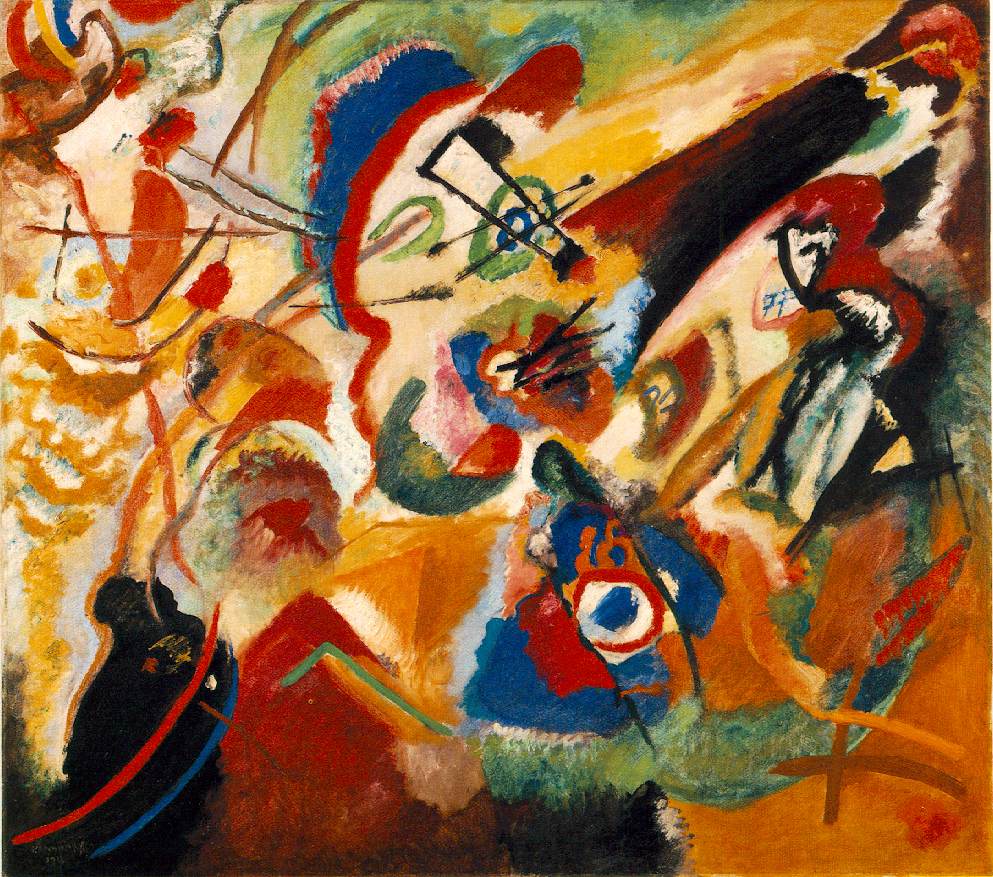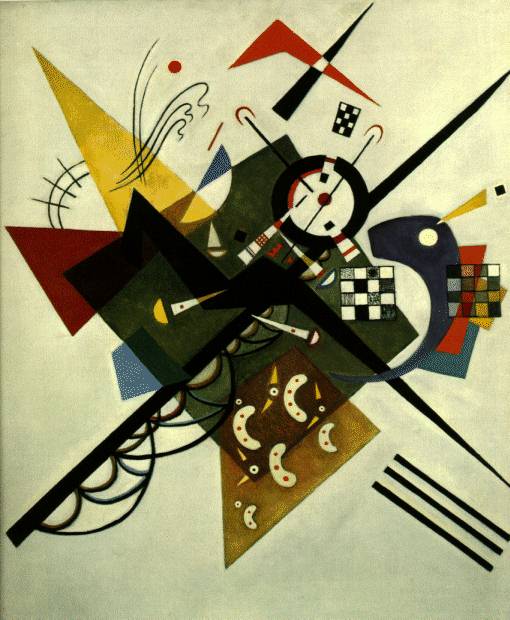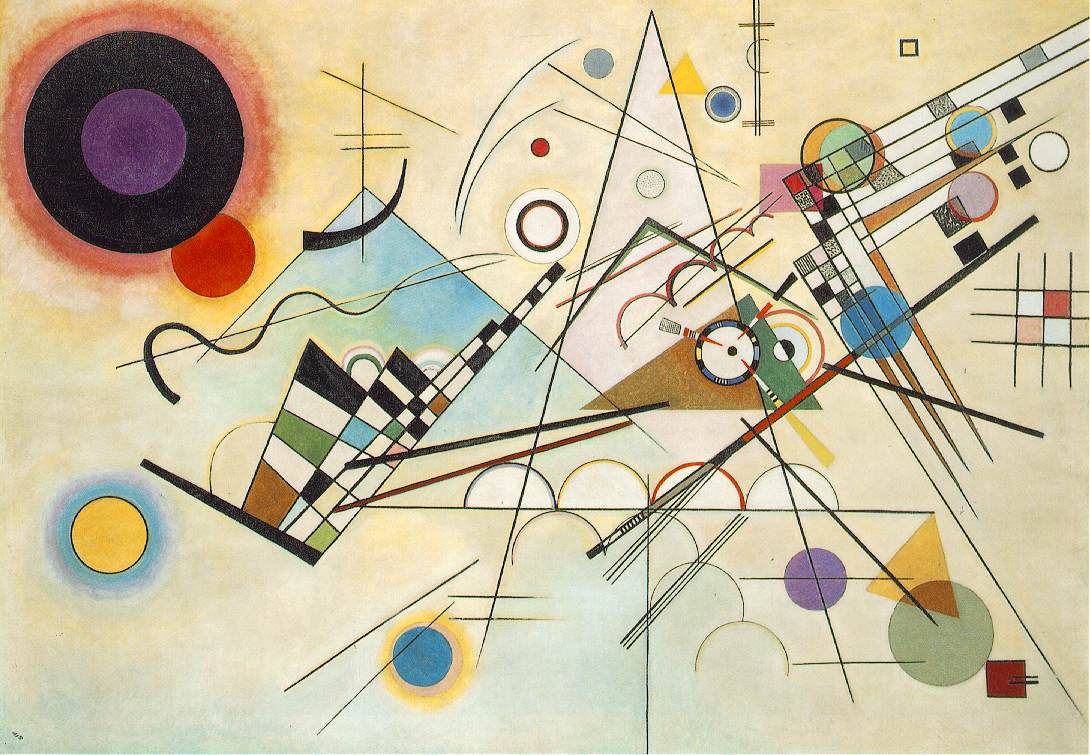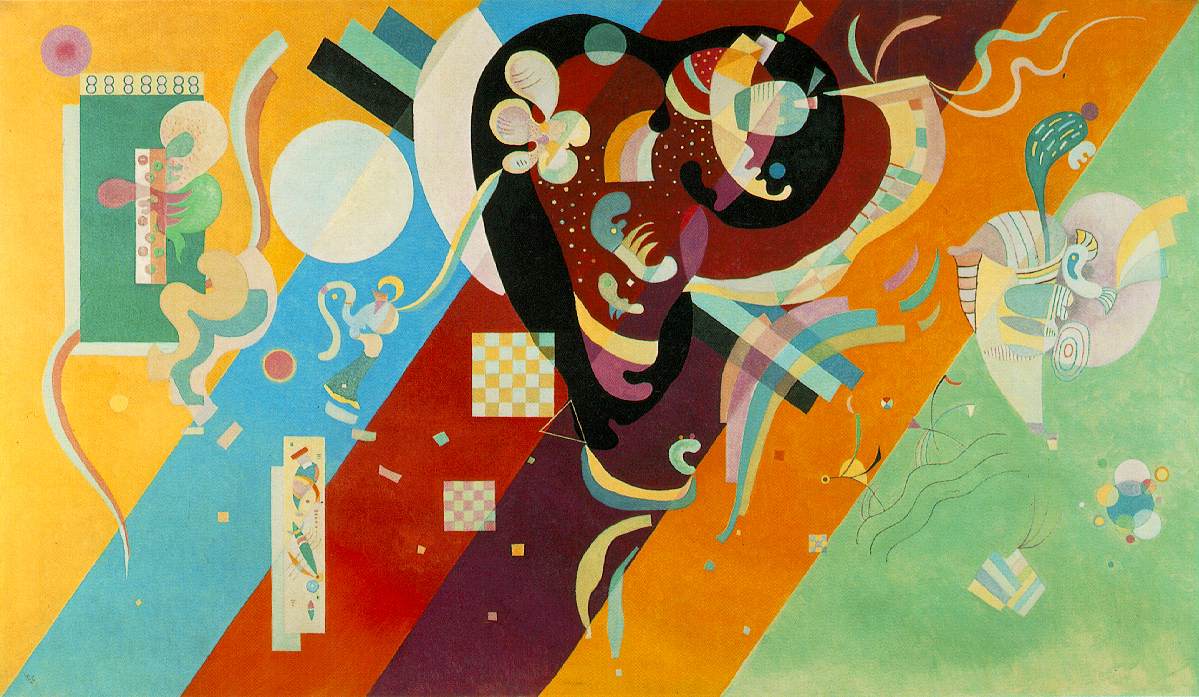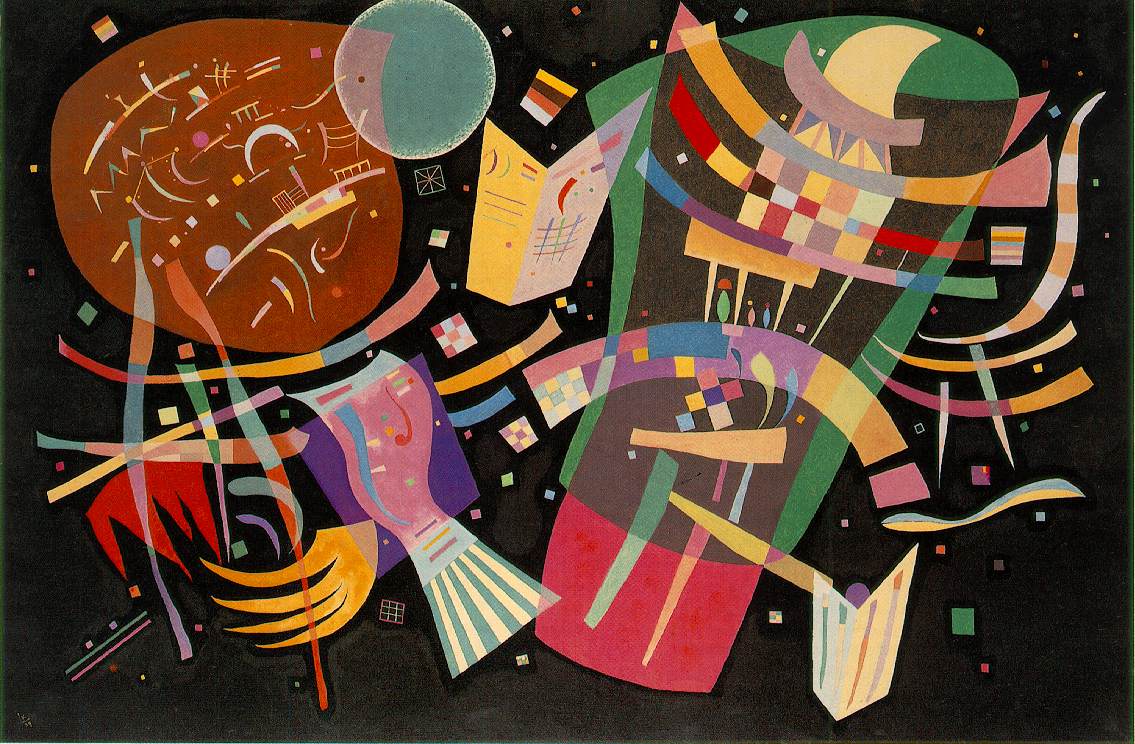
Wassily Kandinsky, considered by many as the father of abstract painting, was born on December 4, 1866 and died in the same month, 78 years later–December 13, 1944. Kandinsky was an art theorist, economist, lawyer, teacher and artist. I submit that December is a fine time to honor one of the most influential 20th century painters, whose work is altogether abstracted, expressionistic and spiritual.
Contrary to most critics, Kandinsky did not see abstract painting as being solely concerned with technique: line, color, and shape. He maintained that abstract art represents the inner side of reality rather than the outer form, the esoteric rather than the exoteric. And he also maintained that because abstract art is concerned with the inner side, it can be a means for self-transformation. Given his view of the purpose of art, it is not surprising that Kandinsky was deeply influenced by Theosophy.
When we look at colors on the painter’s palette, a double effect happens: a purely physical effect on the eye, charmed by the beauty of colors firstly, which provokes a joyful impression as when we eat a delicacy. But this effect can be much deeper and causes an emotion and a vibration of the soul, or an inner resonance, which is a purely spiritual effect, by which the color touches the soul itself.